Our Short List of 3
- Best for: Recurve owners who want one dozen matched to 35 pounds without studying spine charts.
- Shaft material: carbon
- Spine: 500
- Shaft length: 30 in; full length 31.5 in
- Shaft diameter: 7.8 mm outer, 6.2 mm inner

- Best for: Households and clubs where one arrow set covers bows from 35 pounds upward.
- Shaft material: carbon fiber, cross-weave build
- Spine: 500 to 550 per the listing description
- Length: 30 in
- Outer diameter: 0.309 in

- Best for: Traditional recurve shooters who shoot off the shelf and want to choose their exact spine.
- Shaft material: pure carbon
- Shaft inner diameter: 6.2 mm
- Spine options: 300, 340, 400, 500, 600, 700
- Length options: 30, 31 and 32 in
All 4 Picks at a Glance
| Product | Specs | Action |
|---|---|---|
| LWANO 31-Inch Carbon Arrows |
| Check price on Amazon |
| Tiger Archery 30-Inch Carbon Arrows |
| Check price on Amazon |
| Pinals Traditional Carbon Feather Arrows |
| Check price on Amazon |
 Easton Genesis XX75 Aluminum Arrows |
| Check price on Amazon |
Key takeaways
- Match spine, length and fletching to a 35 pound recurve with four complete arrow sets, from 500 spine carbon to a classic 1820 aluminum pick.
A 35 pound recurve sits in an awkward middle ground for arrow shopping. It is strong enough to punish a weak shaft, yet light enough that the stiff arrows packed for hunting compounds fly sideways and group poorly. The real decision is not the brand on the box; it is whether the spine, length and fletching on the listing actually match the weight your bow delivers at your draw.
This shortlist is for target shooters stepping up to 35 pounds, traditional archers who shoot off the shelf, and club archers who need a dozen matched arrows at once. Every set below was picked from the names and specifications printed on its Amazon listing, with the listed draw weight range or spine class checked against a 35 pound bow.
Quick Picks
As an Amazon Associate we earn from qualifying purchases
| Product | Best for | Key spec from title |
|---|---|---|
| LWANO 31-Inch Carbon Arrows | All-round practice at exactly 35 pounds | 500 spine carbon, 30 inch shaft |
| Tiger Archery 30-Inch Carbon Arrows | One set shared across several bows | Carbon set listed for 35 to 60 lb bows |
| Pinals Traditional Carbon Feather Arrows | Feather fletching for off-the-shelf shooting | Pure carbon, spine options from 300 to 700 |
| Easton Genesis XX75 Aluminum Arrows | Club and school range sessions | 1820 aluminum, 30 inch, points fitted |
How to Choose
Match the Spine to 35 Pounds First
Spine is the number that decides whether an arrow leaves a 35 pound recurve cleanly or wobbles downrange. For carbon shafts, a 35 pound bow drawn to around 28 inches usually lands in the 500 to 600 spine class, with the longer end of that class suiting longer arrows and heavier points. Go much stiffer, into 340 or 400 spine, and the arrow cannot flex around the riser properly, so groups drift and bare-shaft tuning turns frustrating. When a listing prints a draw weight range instead of a spine number, check that 35 pounds sits inside it rather than at its very edge.
Pick a Length That Clears Your Draw
An arrow should extend past the front of the riser at full draw, with the point sitting safely ahead of your bow hand. Most adults drawing 27 to 29 inches end up on a 30 or 31 inch arrow, which is why nearly every set in this list sits in that window. Cutting a carbon shaft shorter also makes it behave stiffer, so a 30 inch arrow trimmed to 28 inches no longer matches its printed spine. If you are between sizes, choose the longer arrow and the softer spine option; you can trim later, but you cannot add length back.
Choose the Shaft Material for Your Range
Carbon is the default for a reason: it stays straight, shrugs off the bend of a bad release, and comes back from a miss into grass unharmed. Aluminum, like the 1820 Easton in this list, bends instead of breaking, which clubs like because a bent shaft is visible and gets pulled from the line instead of failing later. Wood looks right on a traditional bow but varies more from shaft to shaft. For a 35 pound recurve shot several times a week, carbon gives the most consistent dozen; aluminum is the pick when arrows get shared, dropped and inspected often.
Feathers or Vanes, and Points That Unscrew
Fletching choice follows your rest. Feathers collapse as they pass the riser, so they suit recurves shot off the shelf or with a simple stick-on rest, and they straighten a slightly stiff arrow faster in the first yards of flight. Plastic vanes last longer in wet weather and on whisker-style rests, but they need clearance as they pass the bow. Whichever you choose, look for screw-in points rather than glued tips: a removable 100 grain point lets you replace a damaged tip at the range and adjust front weight when you change draw weight later.
The 4 Best Options
LWANO 31-Inch Carbon Arrows
- Best for: Recurve owners who want one dozen matched to 35 pounds without studying spine charts.
- Shaft material: carbon
- Spine: 500
- Shaft length: 30 in; full length 31.5 in
- Shaft diameter: 7.8 mm outer, 6.2 mm inner
Recurve owners who want one dozen matched to 35 pounds without studying spine charts.
The feathers are real turkey feather, so they flatten in rain and need drying time after a wet session.
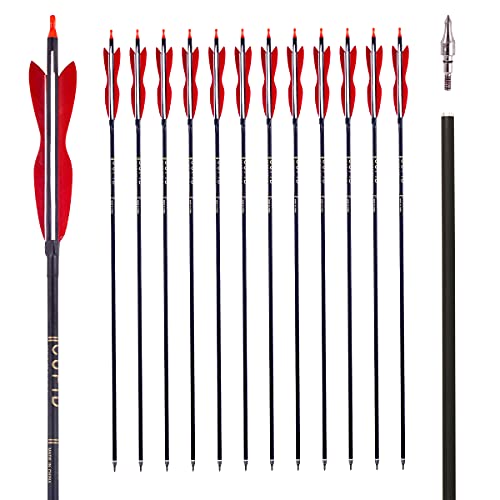
This is the most direct match on the list, because the LWANO listing names the exact situation: its description rates the set for draw weights of 35 to 50 pounds on recurve, compound, traditional and long bows. The 500 spine carbon shaft, 30 inches long with a 31.5 inch full length, lands right in the class a 35 pound recurve wants, and the 5 inch turkey feathers settle the arrow quickly for shelf and rest shooting alike. Twelve matched arrows with removable tips make it an easy first dozen for regular practice.
Tiger Archery 30-Inch Carbon Arrows
- Best for: Households and clubs where one arrow set covers bows from 35 pounds upward.
- Shaft material: carbon fiber, cross-weave build
- Spine: 500 to 550 per the listing description
- Length: 30 in
- Outer diameter: 0.309 in
Households and clubs where one arrow set covers bows from 35 pounds upward.
The product details field prints a 60 pound draw weight figure, so confirm the 35 to 60 pound range in the description before ordering.
Tiger Archery builds this set around a wider window, with the listing describing it for recurve, compound and long bow users from 35 to 60 pounds. That makes it the sensible buy when the same dozen has to serve a 35 pound recurve now and a stronger bow later, or when two archers share equipment. The cross-weave carbon shaft keeps its spine in the 500 to 550 band, the nickel-plated stainless tips unscrew for replacement, and the nocks adjust without glue, so you can rotate them to suit a shelf or a rest in seconds.
Pinals Traditional Carbon Feather Arrows
- Best for: Traditional recurve shooters who shoot off the shelf and want to choose their exact spine.
- Shaft material: pure carbon
- Shaft inner diameter: 6.2 mm
- Spine options: 300, 340, 400, 500, 600, 700
- Length options: 30, 31 and 32 in
Traditional recurve shooters who shoot off the shelf and want to choose their exact spine.
The listing default is a 400 spine, 30 inch set, which is too stiff for most 35 pound bows; select the 500 spine option before ordering.
Pinals takes the opposite approach to a fixed set: one listing, a full ladder of spines from 300 to 700 and lengths of 30, 31 and 32 inches, all in pure carbon with 4 inch right-wing turkey feathers. For a 35 pound recurve, that ladder matters, because you can pick the 500 spine in the length your draw needs instead of accepting whatever a fixed pack contains. The 100 grain points screw in, the nocks adjust without glue, and the box adds twelve spare aluminum inserts, which helps when you trim shafts and rebuild arrows as your form settles.
Easton Genesis XX75 Aluminum Arrows
- Best for: Clubs, schools and beginners who want a ready-to-shoot aluminum set that is easy to inspect.
- Shaft material: 7075 aluminum alloy, hard-anodized
- Size: 1820
- Length: 30 in
- Fletching: Diamond vanes
Clubs, schools and beginners who want a ready-to-shoot aluminum set that is easy to inspect.
The 30 inch length is fixed and the pack holds six arrows, so heavy practice weeks may call for two packs.
The Genesis is the aluminum institution on this list: a 7075 alloy shaft in the 1820 size, the light target class that school and club programs standardize on, finished with Diamond vanes and delivered with the UNI bushing, nock and point already fitted. At 30 inches it suits the draw lengths most 35 pound recurve shooters actually have, and aluminum’s habit of bending visibly instead of cracking makes it easy to inspect a shared set before a session. Six arrows per pack is fewer than the carbon dozens above, but each one arrives ready to shoot.
Which One Fits Your Situation
You Shoot the Same 35 Pound Bow Every Week
Take the LWANO set. Its listing is written for exactly your bow weight, the 500 spine and 30 inch shaft need no trimming or guesswork, and a dozen matched carbon arrows means a lost or damaged shaft never changes how the rest of the set flies during a practice round.
Your Arrows Get Shared Between Bows and People
Choose the Tiger Archery set. The 35 to 60 pound window covers a starter recurve and the heavier bow someone in the group is saving for, the adjustable nocks rotate to match different rests, and the spare nocks in the box keep the set complete when small parts go missing.
You Shoot a Traditional Recurve off the Shelf
Go with the Pinals set and pick the 500 spine option. Real turkey feathers fold past the riser without kicking the shaft off line, the spine ladder lets you match your exact draw length, and the spare inserts make it simple to rebuild arrows after a trim or a repair.
You Run a Club, Class or Family Range
Pick the Easton Genesis arrows. Aluminum shafts show damage as a visible bend, the fitted points and nocks mean nothing to assemble before the first session, and the standardized 1820 size keeps every archer on the line shooting the same arrow, which simplifies coaching, scoring and replacing the occasional shaft that meets a fence post.
Common Mistakes
- Ordering the default variant on a multi-spine listing, which is often a 400 spine set far too stiff for a 35 pound bow.
- Choosing arrow length from your height instead of your draw length, leaving the point behind the riser at full draw.
- Shooting stiff plastic vanes off the shelf, where they strike the riser and push every arrow off line.
- Mixing two lengths or two spine values in one quiver, then blaming the bow for the scattered groups.
- Skipping the flex check on carbon shafts after a miss; a cracked shaft should be discarded, never shot again.
Frequently Asked Questions
What spine arrows does a 35 pound recurve need?
Most 35 pound recurves shooting 28 to 30 inch arrows group best with a 500 to 600 spine carbon shaft, or the 1820 size in aluminum. Longer arrows and heavier points make a shaft behave weaker, so a long draw or a heavy point pushes you toward the stiffer end of that window.
Can I shoot these arrows from a 35 pound longbow or traditional bow?
Yes, as long as the spine and length match your draw. Three of the four sets here are listed for traditional and long bows alongside recurves, and the feather-fletched LWANO and Pinals sets suit bows shot off the shelf, where vanes would strike the riser and spoil the shot.
How long should my arrows be if I draw 28 inches?
A 30 inch arrow is the common answer, leaving the point about two inches ahead of the riser at full draw for a safe margin. Every set in this list comes in a 30 inch option or longer, so match the length to your draw rather than trimming a longer shaft on day one.
Are feather fletchings better than vanes on a recurve?
Neither wins everywhere. Feathers forgive contact with the riser and stabilize a borderline spine quickly, which is why shelf shooters prefer them, but they suffer in rain. Vanes shrug off weather and last longer on a raised rest. Match the fletching to how your bow is set up, not to looks.