Our Short List of 3

- Vitreous china glaze resists absorption and wipes clean
- Fits the standard 14 x 17 inch cutout installers know well
- Oval shape has no corners for deposits to collect
- Overflow included and ADA compliant when installed correctly
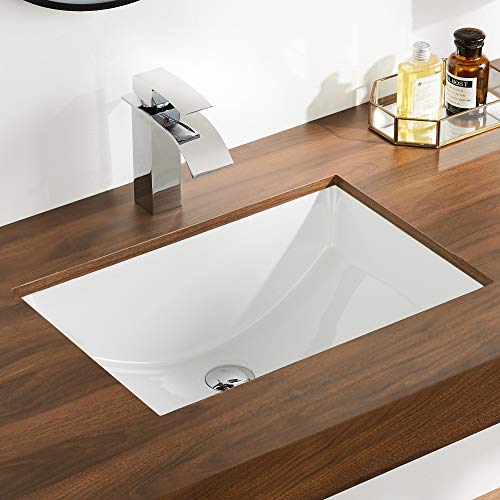
- Roomy rectangular basin with 6.3-inch interior depth
- Smooth polished glaze resists staining and wipes clean
- Undermount design removes the rim seam where scale collects
- Built-in overflow and included mounting hardware

- Deep, curved basin limits splashing and contains water
- Glazed ceramic resists stains, acids, and yellowing
- Undermount design makes countertop cleanup simple
- Integrated overflow and standard 1.75-inch drain opening
All 3 Picks at a Glance
| Product | Specs | Action |
|---|---|---|
| KOHLER Caxton K-2210 Oval Undermount Bathroom Sink |
| Check price on Amazon |
| DeerValley DV-1U101 Rectangular Undermount Bathroom Sink |
| Check price on Amazon |
| HOROW HR-S5138D Rectangular Undermount Bathroom Sink |
| Check price on Amazon |
Key takeaways
- Best bathroom sinks for hard water areas: vitreous china, glazed ceramic and fireclay basins that resist mineral buildup, with expert care and buying tips.
Hard water leaves its mark on a bathroom sink. Calcium and magnesium in the water dry into white spots, chalky rings, and a dull film that returns within days of cleaning, and over time the deposits can etch some surfaces permanently. The best bathroom sinks for hard water are the ones whose material and finish make that film easy to remove, slow to form, and unlikely to cause lasting damage. This guide explains which sink materials hold up in mineral-rich water, what to avoid, and compares three basins that suit hard-water homes: a classic vitreous china undermount oval, a rectangular glazed ceramic undermount, and a deep glazed ceramic undermount with a curved basin.
The problem is not the water alone but the combination of water and surface. Smooth, dense, non-porous surfaces give mineral deposits little to grip, so a quick wipe removes them. Porous or rough surfaces trap minerals in tiny openings, and the film builds into a stain that resists ordinary cleaning. Finish matters as well: a glossy glaze is easier to wipe than a matte one, and a light colour hides pale scale better than a dark one. Installation style plays a role too. An undermount sink lets water and toothpaste be wiped straight from the counter into the basin, with no rim to trap deposits, while a vessel sink exposes more surface to splashing and drying water.
No sink is fully immune to hard water, but choosing the right basin turns a daily battle into a quick wipe.
At a Glance
| Product | Best for | Key spec |
|---|---|---|
| KOHLER Caxton K-2210 | Classic undermount replacement | 19-1/4 in oval, vitreous china, fits 14 x 17 in cutout |
| DeerValley DV-1U101 | Rectangular undermount on a standard vanity | 21.06 x 14.72 x 8.35 in, glazed ceramic, overflow |
| HOROW HR-S5138D | Deep basin and splash control | 20.28 x 15.16 x 7.87 in, glazed ceramic, overflow |
How to Choose a Bathroom Sink for Hard Water
Material first. Vitreous china is the standard for hard-water bathrooms: the clay body is fired and glazed into a dense, glassy surface that resists absorption and staining, and mineral film sits on top of the glaze rather than soaking in. Glazed ceramic behaves similarly when the glaze is smooth and fully fired. Fireclay is a denser ceramic fired at very high temperatures, with a thick glaze that resists staining well, though it can chip if struck hard. Granite composite hides water spots better than glossy surfaces because its speckled finish disguises pale scale, and darker composite colours hide deposits more than pale ones. Stainless steel resists corrosion and wipes clean, but it shows water marks readily, so a brushed finish hides spots better than a mirror finish.
Surfaces to avoid. Acrylic and low-cost composite basins are porous enough to hold a permanent mineral film, and they scratch easily, which creates more places for deposits to grip. Copper reacts with minerals and changes colour unevenly in hard-water homes. Enameled cast iron looks classic and resists staining while the enamel is intact, but a single chip exposes iron that rusts quickly, and a rust ring in a hard-water bathroom appears fast. Unsealed natural stone is the riskiest choice of all, since it absorbs minerals and stains.
Glaze and finish. A smooth, high-gloss glaze is the easiest surface to keep clean in hard water, because deposits have nothing to catch on and a soft cloth removes them. Matte and textured finishes look modern but hold scale in their texture. Light colours, especially white and biscuit, make pale calcium film less visible than dark colours, where every dried drop shows as a white ring. A basin with gently sloped sides drains better than a flat-bottomed one, since standing water is what leaves the worst rings.
Installation style. Undermount sinks are the practical favourite for hard-water homes because the countertop meets the basin with no raised rim, so water, toothpaste, and cleaning residue wipe straight into the bowl. Drop-in sinks are easier to install and replace, but the rim creates a narrow seam where deposits collect. Vessel sinks look striking and suit powder rooms, yet their tall outer walls catch splashes that dry into visible marks, so they demand more wiping. Wall-mounted sinks free the floor and suit small rooms, but the basin material matters just as much as the mount.
Size, depth, and overflow. A deeper basin contains splashing, which matters when the household includes children or tall faucets, and a curved or sloped bottom moves water toward the drain instead of letting it pool. An overflow opening adds a safeguard against a filling basin and is worth having in a family bathroom. Check the drain size before ordering: most bathroom sinks in this guide use a standard 1.75-inch drain opening that fits common pop-up drains. Confirm the countertop cutout before ordering.
Cleaning routine. The sink that survives hard water is the one that gets wiped. A quick pass with a soft cloth after the morning routine removes water before it dries into scale, and a weekly wipe with diluted white vinegar dissolves light buildup without harsh chemicals. Avoid abrasive pads and scouring powders on glazed surfaces, since scratches create new places for minerals to lodge. Keep the area around the faucet dry too, because the base of the faucet is where scale collects first and where it is hardest to remove once it hardens.
KOHLER Caxton K-2210 Oval Undermount Bathroom Sink
- Vitreous china glaze resists absorption and wipes clean
- Fits the standard 14 x 17 inch cutout installers know well
- Oval shape has no corners for deposits to collect
- Overflow included and ADA compliant when installed correctly
The Caxton K-2210 is the long-running classic of this guide, and the safe choice for a standard undermount replacement. It is an oval basin in vitreous china, designed to sit beneath a solid-surface or stone countertop, and it fits the standard 14-inch by 17-inch countertop cutout that fabricators know well. That familiarity matters: a countertop installer who has fitted dozens of Caxtons will cut the opening correctly the first time, and the included clamp hardware follows a well-understood pattern.
The overall size is about 19-1/4 inches by 16-1/4 inches, with a bowl measuring 17 inches by 14 inches and a water depth of about 4 inches to the overflow. The bowl is on the shallow side for this group, so splashing is more noticeable with a tall or high-flow faucet, and households that run the tap hard may prefer a deeper basin. The drain hole is 1-3/4 inches, matching standard pop-up drains, and the overflow sits at the front of the bowl. The sink is ADA compliant when installed to the relevant requirements, which suits accessible bathrooms and multigenerational homes.
For hard-water use, vitreous china is the key feature. The glazed surface is dense and non-porous, so calcium film rests on the glaze and wipes away with a cloth and mild cleaner rather than soaking into the material. The oval shape has no corners for deposits to collect in, and the undermount installation removes the rim seam where scale often builds. White is the standard colour, and lighter colours show pale scale less than dark ones. The sink carries the maker’s lifetime limited warranty for vitreous china bathroom sinks, subject to the current warranty wording.
This sink is best for a straightforward replacement in a bathroom with a standard vanity and a stone or solid-surface counter, where a proven, widely available basin matters more than a distinctive shape. It is less suited to bathrooms that need a deep basin for splash control, or to laminate counters, which do not support undermount installation in the usual way.
Pros:
Cons:
DeerValley DV-1U101 Rectangular Undermount Bathroom Sink
- Roomy rectangular basin with 6.3-inch interior depth
- Smooth polished glaze resists staining and wipes clean
- Undermount design removes the rim seam where scale collects
- Built-in overflow and included mounting hardware
The DeerValley DV-1U101 is the rectangular option in this guide, and the one that makes the most of a standard vanity width. Its exterior measures 21.06 inches by 14.72 inches by 8.35 inches, with an interior basin of 18.98 inches by 12.6 inches and a depth of 6.3 inches. That interior is roomier than the Caxton’s, and the rectangular shape gives straight sides that suit modern vanities and leave a generous washing area. The sink weighs 20 pounds and is made from glazed ceramic with a polished white finish.
The undermount installation is the main hard-water advantage here, just as with the Caxton: the countertop edge meets the basin without a raised rim, so water and residue wipe directly into the bowl. The polished glaze is smooth and non-porous, which keeps mineral film on the surface where a cloth can remove it, and the rectangular basin drains through a standard 1.75-inch opening with a pop-up drain. A built-in overflow adds protection against an overfilled basin, and mounting hardware is included with the sink. The exterior dimensions suit a standard bathroom counter, though the cutout should be confirmed against the template before the countertop is cut.
The DV-1U101 suits buyers who want a clean, modern rectangle rather than an oval, and who value basin space in a compact bathroom. The straight sides and flat rim line read as contemporary, and the white glaze matches most vanity and tile choices. The one-year manufacturer warranty is shorter than the Caxton’s, which is worth noting for a fixture expected to last for years, and the faucet and drain are not included, so those must be ordered to match.
This sink is best for a modern bathroom where a rectangular undermount basin fits the vanity and the owner wants a roomy bowl without a large footprint. It is less suited to buyers who want the longest warranty available, or to drop-in replacement jobs where the existing countertop cannot take an undermount.
Pros:
Cons:
HOROW HR-S5138D Rectangular Undermount Bathroom Sink
- Deep, curved basin limits splashing and contains water
- Glazed ceramic resists stains, acids, and yellowing
- Undermount design makes countertop cleanup simple
- Integrated overflow and standard 1.75-inch drain opening
The HOROW HR-S5138D is the deep-basin pick of this guide. Its exterior measures 20.28 inches by 15.16 inches by 7.87 inches, with an interior of 17.91 inches by 12.8 inches by 5.91 inches, and it weighs 19.5 pounds. The basin is glazed ceramic with a polished white finish, and its curved bottom is designed to move water toward the drain while limiting splashing. An integrated overflow hole guards against spills from an overfilled basin, and the drain opening is the standard 1.75 inches.
Depth is the feature that sets this sink apart for hard-water homes. A deeper, curved bowl contains the spray from a tall faucet and keeps water in the basin instead of on the counter, which means fewer dried drops on the countertop and around the faucet base, where scale is hardest to remove. The undermount fit keeps the counter edge clean, and the glazed ceramic surface resists stains, acids, corrosion, fading, and yellowing according to the maker’s manual, which is the right combination for water that leaves mineral deposits behind.
The HR-S5138D has no faucet holes, so the faucet mounts on the countertop or the wall behind the sink, which keeps the basin itself free of extra openings where deposits collect. The sink ships with the basin and installation instructions, while the drain and faucet are ordered separately. The maker’s warranty is 12 months with lifetime after-sales service, so the after-sales support is a point in its favour even though the formal warranty period is short. Professional installation is recommended, as with most undermount sinks, since the basin must be sealed and clipped securely beneath the counter.
This sink is best for a family bathroom or a half bath where splashing is a daily reality and a deeper basin makes the room easier to keep clean. It suits countertop and wall-mount faucets and modern vanities. It is less suited to a quick drop-in replacement, or to a bathroom where the countertop cannot accept an undermount.
Pros:
Cons:
Which One Fits Your Bathroom
All three sinks share the qualities that matter in hard water: a smooth, glazed, non-porous surface and an undermount fit that removes the rim seam. The choice comes down to shape, depth, and the existing countertop. The KOHLER Caxton K-2210 is the pick for a classic replacement where a proven oval and a standard cutout matter most, and where the installer’s familiarity with the model keeps the job simple. The DeerValley DV-1U101 is the pick for a modern bathroom that wants a roomy rectangular basin on a standard vanity. The HOROW HR-S5138D is the pick for a household that wants the deepest basin and the best splash control, especially with a tall faucet or children using the sink.
Depth deserves emphasis for hard-water buyers. A shallow bowl looks elegant but sends more water onto the counter, and every drop that dries on the counter leaves scale. A deeper, curved basin keeps water where it belongs and makes the daily wipe-down shorter. Whichever basin is chosen, the habit matters as much as the material: wipe the bowl and counter after use, treat light scale with diluted vinegar, and avoid abrasive cleaners that roughen the glaze.
Frequently Asked Questions
What is the best sink material for hard water?
Vitreous china and glazed ceramic are the strongest choices, because their smooth, non-porous glaze keeps mineral deposits on the surface where they wipe away. Fireclay and granite composite also perform well, and brushed stainless steel resists corrosion, though it shows water marks readily.
Do undermount sinks handle hard water better than drop-in sinks?
Yes, in practice. An undermount sink has no raised rim, so water and residue wipe straight from the counter into the basin, and there is no rim seam for scale to collect in. A drop-in sink is easier to install, but the rim creates a narrow joint that needs regular cleaning.
How do I remove hard water stains from a bathroom sink?
Wipe light buildup with diluted white vinegar on a soft cloth, let it sit briefly, then rinse and dry. For routine care, wipe the basin dry after use so water does not dry into scale. Avoid abrasive pads and scouring powders on glazed surfaces, since scratches give minerals new places to grip.
Will a water softener fix hard water stains on my sink?
A softener changes the water itself, so new scale stops forming, but it will not remove existing etching or stains. Pairing a softener with a glazed basin gives the best long-term result.
Are vessel sinks a good choice for hard water?
Vessel sinks can work, but their tall outer walls catch splashes that dry into visible marks, so they need more wiping than an undermount basin. In a hard-water home, an undermount or drop-in basin with a smooth glaze is usually the lower-maintenance choice.
What sink materials should I avoid in a hard water area?
Avoid unsealed natural stone, porous acrylic, and low-cost composite basins, which trap mineral film, and avoid copper, which reacts with minerals and changes colour unevenly. Enameled cast iron is fine only while the enamel is intact, since a chip exposes iron that rusts quickly.
Conclusion
The best bathroom sinks for hard water are not the most decorative basins but the ones whose surface and installation make mineral buildup easy to manage. Vitreous china and glazed ceramic lead the field, and all three sinks in this guide use those materials with an undermount fit: the KOHLER Caxton K-2210 for a classic replacement, the DeerValley DV-1U101 for a roomy rectangular basin, and the HOROW HR-S5138D for a deep bowl that controls splashing. Choose the shape and depth that fit the vanity, confirm the cutout before ordering, and keep the simple wipe-down habit that makes any of these basins easy to live with in mineral-rich water.
Disclosure: As an Amazon Associate, we earn from qualifying purchases.