Our Short List of 3
All 4 Picks at a Glance
| Product | Specs | Action |
|---|---|---|
 1. Renogy 12V 100Ah Deep Cycle AGM Battery | Check price on Amazon | |
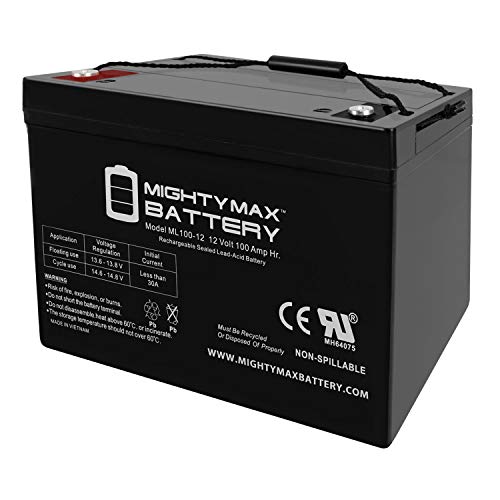 2. Mighty Max ML100-12 12V 100Ah SLA AGM Battery, Group 30H | Check price on Amazon | |
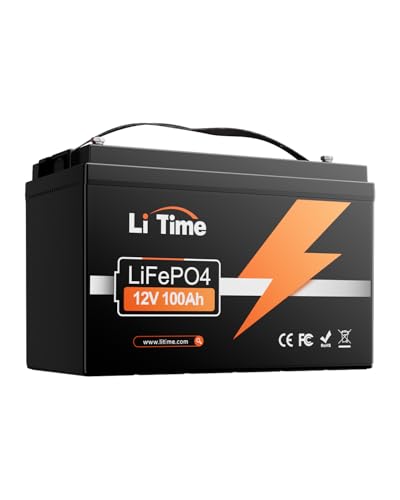 4. LiTime 12V 100Ah Group 31 LiFePO4 Deep Cycle Battery | Check price on Amazon | |
 5. Trojan T-105 6V 225Ah Deep-Cycle Flooded Battery | Check price on Amazon |
Key takeaways
- How many years will a deep cycle battery last? Flooded runs about 4 to 6 years, AGM 4 to 7, and lithium far longer. See what sets lifespan and five picks.
Disclosure: As an Amazon Associate, this site may earn from qualifying purchases made through links on this page.
Intro
A deep cycle battery lasts about four to six years when it is a flooded lead-acid unit, about four to seven years when it is a sealed AGM unit, and ten years or more when it is a lithium iron phosphate unit, known as LiFePO4. Those figures are the honest short answer, and the rest of this article explains why the range is wide, what shortens a battery, and what stretches it. A deep cycle battery is built to drain down and recharge again, hundreds of times, which is a different job from the short burst a cranking battery gives a starter motor. Because the job is repeated draining, the number that matters most is not the headline capacity but how the battery is used between charges: how deep each drain goes, how soon it is recharged, how hot it runs, and whether the charger matches the chemistry inside.
The five picks below cover the whole spread of the answer. There are two 12V 100Ah AGM units, a 12V 100Ah lithium unit, a 6V 225Ah flooded golf-cart unit, and a second 12V 100Ah AGM in a different case size, so the article shows flooded, AGM, and lithium side by side in the same size class. Every figure quoted for a pick comes from its own listing, and every pick was confirmed live on Amazon US with two separate fetches. The lifespan figures in the guide are general knowledge about battery chemistry, not the result of a lab session.
At a Glance
- Flooded lead-acid deep cycle batteries usually run 4 to 6 years; sealed AGM runs 4 to 7 years; gel runs 5 to 7 years; LiFePO4 runs 10 years or more.
- Depth of discharge sets lifespan more than any other habit: shallow drains stretch life, deep drains shorten it.
- Heat is the quiet killer: a battery kept hot ages faster than the same battery kept cool.
- Recharge promptly after use, and never leave a lead-acid battery sitting drained for weeks.
- Flooded batteries need water checks; sealed AGM and gel do not; lithium needs a charger with a lithium setting.
- The five picks below span 6V flooded, 12V AGM, and 12V lithium, all confirmed live on Amazon US.
How to Choose
Lifespan by chemistry
Flooded lead-acid is the oldest deep-cycle design. Its plates sit in liquid electrolyte, and it tolerates deep drains well when it is watered and charged on time. In a golf cart, a solar bank, or a floor machine it usually gives four to six years. Sealed AGM holds the electrolyte in glass mats, needs no water, and usually gives four to seven years, with the same care. Gel thickens the electrolyte into a paste and usually gives five to seven years, with slower self-discharge during idle stretches. Lithium iron phosphate is a different family altogether: the LiTime pick below lists up to 15,000 cycles and a service life past ten years, at a weight near a third of a lead-acid unit of the same capacity. The trade is that lithium wants a charger with a lithium setting, and it behaves differently in freezing weather, so the charger and the climate both belong in the decision.
Depth of discharge
Depth of discharge, written DoD, is the share of capacity used before recharging. A lead-acid battery drained to half its capacity on each cycle lasts far longer than the same battery drained to four-fifths on each cycle. The common guidance is to keep lead-acid drains near half or shallower when the setup allows it, and to size the bank so a normal day of use stays inside that band. Lithium tolerates deeper drains with less wear, which is part of why its cycle count runs so much higher, yet even lithium lasts longer when drains stay moderate.
Temperature
Heat speeds every chemical reaction inside a battery, including the ones that wear it out. A battery stored in a hot shed ages faster than the same battery stored in a cool garage, and a battery charged while hot ages faster still. Cold, by contrast, trims the capacity a battery can hand over on a given day without doing lasting harm, as long as a frozen battery is never charged. Keep the bank out of direct sun, away from engine heat, and in moving air when possible.
Charging habits
Three habits decide most of the lifespan a battery actually gives. First, recharge promptly after use, because a lead-acid battery left drained begins to sulfate, a crust that forms on the plates and never fully leaves. Second, match the charger to the chemistry: AGM, gel, flooded, and lithium each want their own charging voltage, and the wrong setting dries a gel battery or undercharges an AGM one. Third, avoid long stretches at full charge in high heat for lithium, and avoid long stretches drained for lead-acid. A charger with a setting for the battery type is the cheapest insurance a bank can have.
Maintenance
Flooded batteries need their water checked, and the plates must stay covered. Sealed AGM and gel need no water, which is the main reason many buyers choose them for a bank that is hard to reach. Lithium needs no water either, and its built-in management system guards against overcharge, over-discharge, and short circuits. Whatever the chemistry, the terminals deserve a periodic look: a loose or corroded terminal runs hot, wastes energy, and can mimic a dying battery.
The Picks
1. Renogy 12V 100Ah Deep Cycle AGM Battery
Renogy 12V 100Ah Deep Cycle AGM Battery
The Renogy 12V 100Ah deep cycle AGM battery is the reference pick for the article, a sealed lead-acid unit built for solar banks, RVs, and marine use. Its listing states a maximum discharge current of 1100A for five seconds, a monthly self-discharge held low, and a working range from minus 4 to 140 degrees Fahrenheit, which covers cold mornings and hot equipment rooms alike. It supports series connections without a stated limit and parallel connections up to four units, so a bank can grow from one battery to four without changing the model. The listing also states that more than 230,000 units sold worldwide over six years, a sign of a long production run rather than a short-lived listing. For a buyer who wants the standard answer to the lifespan question, this is it: a 100Ah AGM unit, sealed, widely used, and sized for the most common 12V bank in a solar or RV setup.
2. Mighty Max ML100-12 12V 100Ah SLA AGM Battery, Group 30H
Mighty Max ML100-12 12V 100Ah SLA AGM Battery Group 30H
The Mighty Max ML100-12 is a 12V 100Ah sealed lead-acid AGM battery in Group 30H size, UL certified, and built for solar, wind, and deep-cycle service. Its listing is thin, with a single descriptive line and the certification mark, so there is less to quote than for the Renogy pick, and a buyer should confirm the case dimensions against the tray before ordering, since the listing does not publish them in the material fetched here. What it does state is the core of the pick: 100Ah at 12V, sealed AGM construction, and a deep-cycle build meant for repeated draining. Group size matters when a tray or a box was cut for one size and not another, so the 30H designation is the figure to match against the old battery. This pick suits a buyer who wants the same 100Ah capacity as the Renogy in a different case size and from a different maker.
3. Mighty Max ML100-12 12V 100Ah SLA AGM Battery, Group 27
Mighty Max ML100-12 12V 100Ah SLA AGM Battery Group 27
The second Mighty Max ML100-12 is the same 100Ah sealed lead-acid AGM cell in a Group 27 case, measuring 12.09 by 6.65 by 8.48 inches, UL certified, and listed for solar and wind deep-cycle service. The listing describes it as a spill-proof AGM battery with a high discharge rate, wide temperature range, long service life, and deep discharge recovery, and it states that the battery can mount in any position and resists shocks and vibration. Two picks share the ML100-12 name because the maker sells the same capacity in more than one group size, and this article keeps both on purpose: a buyer whose tray fits Group 27 and a buyer whose tray fits Group 30H should not have to guess which case to order. Match the group size to the tray, not to the brand, and the right one of the two will be obvious. The listing covers the battery and screws only, with no wire harness or mounting accessories included.
4. LiTime 12V 100Ah Group 31 LiFePO4 Deep Cycle Battery
LiTime 12V 100Ah Group 31 LiFePO4 Deep Cycle Battery
The LiTime 12V 100Ah Group 31 LiFePO4 battery is the lithium pick, and it changes the lifespan answer entirely. Its listing states a built-in 100A battery management system that guards against overcharge, over-discharge, short circuits, over-voltage, over-current, and over-temperature, a service life past ten years, and up to 15,000 cycles at three-fifths depth of discharge. It weighs 22.05 lb, near a third of a lead-acid battery of the same capacity, and it carries a five-year warranty with round-the-clock technical support. Those figures explain why lithium dominates the long-life end of the deep-cycle market: the same 100Ah capacity, a far higher cycle count, and a weight that one person can lift without help. The cautions belong here too: the battery wants a charger with a lithium setting, it is not a drop-in replacement for a lead-acid unit on a charger set for flooded cells, and the listing notes a compatibility limit for certain starter and golf-cart uses, so a buyer should read the listing before ordering for those roles.
5. Trojan T-105 6V 225Ah Deep-Cycle Flooded Battery
Trojan T-105 6V 225Ah Deep-Cycle Flooded Battery
The Trojan T-105 is a 6V 225Ah deep-cycle flooded battery, the classic golf-cart unit, with a GC2 group size, a rugged polypropylene case, and the maker Alpha Plus paste with T2 Technology stated on the listing. It measures 10.30 by 7.11 by 10.91 inches and weighs 62 lb, and its stated uses run from golf carts and renewable energy to floor scrubbers and industrial service. The 225Ah figure is quoted at the 20-hour rate, and the listing states an energy output of 1.50 kWh. Two facts about this pick deserve plain language. First, it is a 6V battery, so a 12V bank needs two of them wired in series; a single unit alone does not run a 12V system. Second, it is flooded, so the plates need their water checked and kept covered, which is the one maintenance job the sealed picks in this article never ask for. In exchange, the T-105 gives the longest track record of any deep-cycle design in this article, and a buyer who waters on schedule and recharges promptly can expect the four-to-six-year flooded lifespan the guide above describes.
Comparison Table
| Pick | Type | Capacity | Voltage | Weight | Stated life |
|---|---|---|---|---|---|
| Renogy 100Ah | AGM sealed | 100Ah | 12V | Not stated | Not stated |
| Mighty Max ML100-12, Group 30H | AGM sealed | 100Ah | 12V | Not stated | Not stated |
| Mighty Max ML100-12, Group 27 | AGM sealed | 100Ah | 12V | Not stated | Not stated |
| LiTime 100Ah | LiFePO4 | 100Ah | 12V | 22.05 lb | Past 10 years |
| Trojan T-105 | Flooded | 225Ah | 6V | 62 lb | Not stated |
Which One Fits Your Situation
For a solar bank or an RV setup that must run for years with little attention, begin with the Renogy 100Ah AGM or the LiTime 100Ah lithium. The Renogy is the standard sealed answer, with series and parallel support for a growing bank. The LiTime is the long-life answer, with a cycle count near ten times a lead-acid unit and a weight near a third, as long as the charger has a lithium setting.
For a tray cut to a fixed group size, the two Mighty Max ML100-12 picks are the answer. Both hold 100Ah at 12V, and the only difference that matters is the case: Group 30H for one tray, Group 27 for another. Measure the tray, match the group size, and order the one that fits.
For a golf cart, a floor machine, or a solar bank where the owner waters on schedule, the Trojan T-105 is the classic pick. Remember it is 6V, so a 12V bank needs two in series, and remember it is flooded, so the water checks are part of the ownership. In exchange it gives the longest production history of any deep-cycle design sold today.
For a marine setup that drains deep and sits idle between outings, the AGM picks suit the role, and the gel branch of the sealed family is worth a look in the companion article on this site about what a VRLA battery is.
FAQ
How many years does a flooded deep cycle battery last?
In regular service with water checks and prompt recharging, a flooded deep-cycle battery usually runs four to six years. Deep drains, long idle stretches in a low state, and high heat all shorten that figure, while shallow drains and a charger matched to the battery stretch it.
How many years does an AGM deep cycle battery last?
A sealed AGM deep-cycle battery usually runs four to seven years. It needs no water, which removes the most common maintenance failure, and its life follows the same rules as flooded: shallow drains, prompt recharging, and a cool mounting spot stretch it, while deep drains and heat shorten it.
How many years does a lithium deep cycle battery last?
A LiFePO4 deep-cycle battery usually runs ten years or more. The LiTime pick in this article lists up to 15,000 cycles at three-fifths depth of discharge and a service life past ten years. The charger must have a lithium setting, and freezing weather changes how the battery behaves, so the charger and the climate both belong in the decision.
Does depth of discharge really change lifespan?
Yes, more than any other habit. A lead-acid battery drained to half its capacity on each cycle lasts far longer than the same battery drained to four-fifths on each cycle. Sizing the bank so a normal day of use stays near half or shallower is the single most effective way to stretch lifespan.
Why did my deep cycle battery die after two years?
The usual causes are a charger set for the wrong chemistry, long idle stretches in a low state, deep drains on every cycle, high heat, or low water in a flooded unit. Any one of those can cut a four-to-six-year battery down to two years, and two of them together can cut it further.
Can I mix an old battery with a new one in the same bank?
It is better not to. An old battery with higher internal resistance drags the whole bank down, and the new battery ends up doing more than its share. When one battery in a bank fails, replacing the whole set at once gives the longest life for the money and the most even performance.
Should I leave a deep cycle battery on the charger all winter?
For lead-acid, a maintenance charge that holds the battery full through winter is the right call, because a drained battery left idle begins to sulfate. For lithium, the maker guidance is the authority, and a full charge held for months in high heat is not the ideal storage state. In both cases, store the battery cool, dry, and out of direct sun.
Final Take
A deep cycle battery lasts about four to six years flooded, four to seven years sealed AGM, five to seven years gel, and ten years or more as lithium, and the gap between those figures is set by habits, not by luck. Shallow drains, prompt recharging, a charger matched to the chemistry, and a cool mounting spot stretch every chemistry in this article, while deep drains, heat, and long idle stretches in a low state shorten them all. Of the five picks, the Renogy AGM is the standard sealed answer, the two Mighty Max units cover the two group sizes a tray may demand, the LiTime lithium is the long-life answer, and the Trojan T-105 is the classic flooded answer for owners who water on schedule. Size the bank so a normal day stays near half discharge, match the charger to the battery, and the years in the guide above are the years the battery will actually give.