Our Short List of 3
All 4 Picks at a Glance
| Product | Specs | Action |
|---|---|---|
 1. Odyssey 34-PC1500T Automotive Battery | Check price on Amazon | |
 3. XS Power D3400 12V AGM High Output Battery | Check price on Amazon | |
 4. Interstate MT-24F Group 24F Car Battery | Check price on Amazon | |
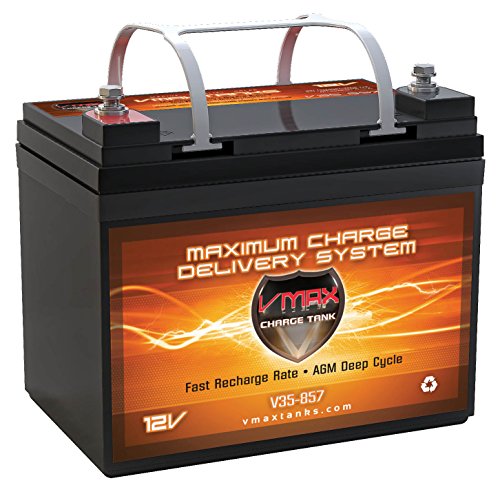 5. VMAXTANKS V35-857 12V 35Ah AGM Marine Deep Cycle Battery | Check price on Amazon |
Key takeaways
- Can radiation deplete a lead acid battery? High doses wear plates and electrolyte down, but background levels do not. See why and five live picks.
Disclosure: As an Amazon Associate, this site may earn from qualifying purchases made through links on this page.
Intro
Yes, radiation can deplete a lead-acid battery, but only at doses far above anything a battery meets in normal storage or normal use. High doses of ionizing radiation break down the water in the electrolyte, wear the plates and the separators, and speed up the self-discharge that drains a battery sitting on a shelf. Background radiation, the low level present everywhere from soil, stone, and the sky, does not do this at any level that matters: a battery stored in a garage, a shed, or a warehouse loses charge to ordinary self-discharge long before background radiation could touch it. The line between harmless and harmful is dose, and this article draws it plainly, then shows five lead-acid batteries that are live on Amazon US right now, from an 850 CCA AGM unit to a 35Ah marine deep-cycle unit.
The answer is general knowledge about battery chemistry and radiation effects, not the result of a lab session, and every figure quoted for a pick comes from its own listing. The question uses the word deplete in the everyday sense of draining a battery down, and this article keeps that meaning throughout: radiation depletes a lead-acid battery when it damages the parts that hold charge, so the battery holds less and loses what it holds faster.
At a Glance
- High doses of ionizing radiation can deplete a lead-acid battery by damaging plates, separators, and electrolyte.
- Background radiation does not deplete a lead-acid battery at any level that matters in normal storage or use.
- The damage grows with dose: radiolysis of water, gas build-up, grid corrosion, and faster self-discharge.
- A lead case gives some shielding, yet shielding is not a cure at high doses; monitoring and rotation are the practical defenses.
- Airport X-ray scans, smoke-detector sources, and household items sit far below the harmful range.
- The five picks below are all lead-acid, all confirmed live on Amazon US, and span AGM cranking, dual-purpose, and marine deep-cycle roles.
How to Choose
What radiation actually does inside a battery
Ionizing radiation carries enough energy to knock electrons loose, and inside a lead-acid battery that energy goes to work on the water in the electrolyte. The water splits into hydrogen and oxygen, a process called radiolysis, and the gas raises pressure inside the case while the water level falls. The same radiation roughens the plates and the grids, wears the separators that keep the plates apart, and speeds the chemical reactions that drain a charged battery on its own. The visible result is a battery that holds less charge than it did, loses charge faster while sitting idle, and reaches the end of its service life sooner. Published work on lead-acid cells exposed to gamma radiation reports exactly this pattern, with capacity loss growing as absorbed dose rises. No household source comes close to those doses, and the effect is a matter of industrial, nuclear, and space settings, not of a garage shelf.
Background levels versus high doses
Background radiation is the low, steady level from soil, stone, building materials, and cosmic rays, and it is measured in tiny doses spread over a whole year. A battery would need to sit for longer than its own service life for background radiation alone to matter, and ordinary self-discharge would drain it first. High doses come from a different world: industrial radiography sources, nuclear facility work, sterilization plants, and space missions beyond the shielding of the atmosphere. In those settings the dose rate is high enough that a battery left in place for months can show real capacity loss. The practical line is simple: if the setting needs dosimeters and shielding for people, it needs a battery plan too; if it does not, the battery needs no radiation plan at all.
Shielding, monitoring, and rotation
Lead is a good shield, and a lead-acid battery already carries a large amount of lead in its plates, which is one reason the design tolerates radiation better than many chemistries. Even so, shielding alone is not a cure at high doses, because the radiation that matters in those settings is strong enough to reach the electrolyte through the case. The practical defenses are monitoring and rotation: check voltage and capacity on a schedule, keep a spare set in rotation so no single battery sits in the field for its whole life, and replace a battery that shows falling capacity rather than waiting for it to fail. In a high-dose setting, a sealed AGM unit has one more advantage: its electrolyte is held in glass mats, so gas and water loss behave differently from a flooded unit with a loose liquid fill.
Picking a lead-acid battery for the job
Group size sets the case dimensions and the terminal layout, and it must match the tray. Cold cranking amps, written CCA, set how much current the battery can hand over in cold weather for a cranking role. Reserve capacity, in minutes, sets how long the battery can run a load with the charging system off. AGM suits vibration, mounting in many positions, and deep cycling; flooded suits steady cranking service at a lower outlay and tolerates overcharging with water top-ups. Terminal style matters too: dual SAE and GM terminals suit mixed fleets, M6 bolts suit high-output audio and winch wiring, and standard top posts suit most cars and trucks.
The Picks
1. Odyssey 34-PC1500T Automotive Battery
Odyssey 34-PC1500T Automotive Battery
The Odyssey 34-PC1500T is a sealed AGM automotive battery with 850 cold cranking amps, measuring 10.85 by 6.76 by 7.82 inches, and it is the strongest cranking pick in the article. Its listing states a service life of three to ten years, a cycle life far longer than a conventional deep-cycle battery, with up to 400 cycles at four-fifths depth of discharge, and a recharge time of four to six hours to full. The warranty is a limited three-to-four-year full replacement term, not a pro-rated one, which is the detail to note when comparing it with the other picks. The short-circuit figure stated on the listing is 3100 amps. For a vehicle that must crank in cold weather and run accessories with the engine off, this is the pick with the widest margin in the article, and its sealed AGM build is also the build that handles vibration and mounting in many positions best.
2. OPTIMA YellowTop D34/78 Dual Purpose AGM Battery
OPTIMA YellowTop D34/78 Dual Purpose AGM Battery
The OPTIMA YellowTop D34/78 is a sealed AGM dual-purpose battery, built to crank an engine and to run accessories afterward, with 750 cold cranking amps, a C20 capacity of 55Ah, a reserve capacity of 120 minutes, and a weight of 43.5 lb in a case measuring 10 by 6 and 7/8 by 7 and 13/16 inches. Its SpiralCell design winds the plates into coils of nearly pure lead, and the listing states that the design gives optimal cranking power in bad weather, resists vibration fifteen times better than a standard flooded battery, and lasts up to three times longer than a standard flooded battery. The terminals are dual SAE and GM, so the same battery fits a wide range of vehicles without an adapter. For a truck or SUV that runs a winch, lights, or a fridge between drives, the dual-purpose build is the right call, and the YellowTop is the pick in this article that carries that role.
3. XS Power D3400 12V AGM High Output Battery
XS Power D3400 12V AGM High Output Battery
The XS Power D3400 is a 12V AGM high-output battery with 1000 cranking amps, 65Ah of capacity, and a maximum current figure of 3,300 amps stated on the listing, with M6 terminal bolts. Its electrolyte is suspended in fiberglass, the case is spill-proof and sealed and valve-regulated, and the listing states that it resists vibration and can mount in almost any position. Those traits mark it as the high-output pick of the article, suited to audio systems, winches, and other loads that ask for a large burst of current on demand. The M6 bolts suit heavy cable lugs, and a buyer should check that the existing lugs match before ordering, since the terminal style differs from the standard top posts on the other cranking picks. In a high-radiation setting the sealed AGM build is also the one whose electrolyte stays put, which is a small but real advantage over a flooded case.
4. Interstate MT-24F Group 24F Car Battery
Interstate MT-24F Group 24F Car Battery
The Interstate MT-24F is the flooded pick of the article, a Group 24F car battery with a 24-month warranty and a listing that states it fits more than 1,500 year, make, and model combinations. One figure needs a plain note: the title states 600 cold cranking amps while the bullets state 700 cold cranking amps and 110 minutes of reserve capacity. This article uses the title figure of 600 CCA and flags the conflict, so a buyer who needs the higher figure should confirm it with the seller before ordering. The listing describes the MT series as a better flooded battery for hot to moderate climates, with a high electrolyte-to-lead ratio that resists extreme temperatures, and it notes a refundable core deposit on the listing. Flooded batteries tolerate overcharging with water top-ups and suit steady cranking service, and the MT-24F is the pick for a buyer who wants that familiar design in the most common group size on the road.
5. VMAXTANKS V35-857 12V 35Ah AGM Marine Deep Cycle Battery
VMAXTANKS V35-857 12V 35Ah AGM Marine Deep Cycle Battery
The VMAXTANKS V35-857 is a 12V 35Ah AGM marine deep-cycle battery in Group U1 size, and it closes the article with the deep-cycle branch of the lead-acid family. Its listing states a reserve capacity of 75 minutes and estimated run times for a 30 lb thrust trolling motor: 1.2 hours at full throttle, 3.5 hours at medium speed, and 5.8 hours at low speed. The plates are described as military grade for durability, the battery is sealed and can install in any orientation, and the listing states that there is no need to check specific gravity or add water. The recommended chargers named on the listing are the VMAX BC1204 and BC1205. For a small boat, a trolling motor, or a solar setup that drains deep and sits idle between outings, the V35-857 is the right size class, and its sealed AGM build is the one that handles the vibration and the tilt of a boat best.
Comparison Table
| Pick | Type | Capacity | Cranking amps | Reserve | Weight |
|---|---|---|---|---|---|
| Odyssey 34-PC1500T | AGM sealed | Not stated | 850 CCA | Not stated | Not stated |
| OPTIMA YellowTop D34/78 | AGM sealed | 55Ah | 750 CCA | 120 min | 43.5 lb |
| XS Power D3400 | AGM sealed | 65Ah | 1000 CA | Not stated | Not stated |
| Interstate MT-24F | Flooded | Not stated | 600 CCA (title) | 110 min | Not stated |
| VMAX V35-857 | AGM sealed | 35Ah | Not stated | 75 min | Not stated |
Which One Fits Your Situation
For a car or truck that must crank in cold weather and run accessories with the engine off, begin with the Odyssey 34-PC1500T. Its 850 CCA is the highest cranking figure in the article, its sealed AGM build handles vibration well, and its full-replacement warranty is the clearest of the five. Confirm the group size against the tray, since the case is wider than a Group 24F unit.
For a truck or SUV with a winch, lights, or a fridge, the OPTIMA YellowTop D34/78 is the dual-purpose pick. Its 750 CCA covers cranking, its 55Ah capacity and 120-minute reserve cover accessory loads, and its dual SAE and GM terminals fit a wide range of vehicles without an adapter.
For an audio system, a winch, or any load that asks for a large burst on demand, the XS Power D3400 is the high-output pick. Its 1000 cranking amps and 3,300-amp maximum current figure lead the article, and its M6 bolts suit heavy cable lugs. Check the lugs before ordering.
For steady cranking service in a common group size, the Interstate MT-24F is the flooded pick. Its Group 24F case fits more than 1,500 vehicle combinations, and its flooded design tolerates overcharging with water top-ups. Confirm the cranking figure with the seller first, since the listing shows 600 CCA in the title and 700 CCA in the bullets.
For a small boat, a trolling motor, or a solar setup that drains deep, the VMAX V35-857 is the deep-cycle pick. Its 35Ah capacity and 75-minute reserve suit a 30 lb thrust motor, and its sealed AGM build handles tilt and vibration. Pair it with a charger that has an AGM setting.
FAQ
Can background radiation drain my car battery?
No. Background radiation is far too weak to matter. A battery stored in a garage loses charge to ordinary self-discharge long before background radiation could touch it, and no household source comes close to the doses that damage a lead-acid battery.
Will an airport X-ray scan harm a battery in luggage?
No. A single X-ray scan delivers a tiny dose, far below the range that damages plates or electrolyte. The battery in a device or a bag passes through security without any measurable effect on its capacity.
What about the tiny radiation source inside a smoke detector?
The americium source inside an ionization smoke detector is sealed, tiny, and far below any level that could affect a battery. A 9V battery sitting in the same detector for years is drained by ordinary self-discharge, not by the detector source.
Does radiation affect AGM and flooded batteries differently?
The chemistry is the same lead-acid family, so the damage mechanisms are the same: water loss, plate wear, and separator wear. AGM holds its electrolyte in glass mats, so water loss and spills behave differently from a flooded unit, and a sealed case keeps the electrolyte in place. In a high-dose setting that difference is a small advantage, not a cure.
Is radiation the same as an electromagnetic pulse?
No. An electromagnetic pulse is a burst of electromagnetic energy that can damage electronics, while ionizing radiation is particles and rays that damage materials at the atomic level. A lead-acid battery has no sensitive electronics inside, so a pulse is far less of a worry for the battery itself than it is for the charger or the vehicle electronics around it.
How would I know a battery was damaged by radiation?
The signs are the same as ordinary wear, only faster: falling capacity, faster self-discharge, and a battery that reaches full charge yet runs out sooner than it used to. In a high-dose setting, the defense is a schedule: check voltage and capacity on a regular plan, rotate a spare set through the field, and replace a battery that shows falling capacity rather than waiting for it to fail.
Should I shield a battery stored near a radiation source?
Shielding helps, and lead is a good shield, yet shielding alone is not a cure at high doses. The practical plan in a high-dose setting is monitoring, rotation, and timely replacement, with shielding as one part of the plan rather than the whole of it. In a normal setting, no shielding plan is needed at all.
Final Take
Radiation can deplete a lead-acid battery, but only at high doses of ionizing radiation, the kind found in industrial, nuclear, and space settings, where it breaks down electrolyte water, wears plates and separators, and speeds self-discharge. Background radiation, airport scans, and household sources sit far below that range and do not matter for any battery in normal storage or use. The defense in a high-dose setting is monitoring, rotation, and timely replacement, with a sealed AGM build as the sturdier choice. Of the five picks here, the Odyssey leads on cranking, the YellowTop covers dual-purpose service, the XS Power leads on burst output, the Interstate covers the common flooded role, and the VMAX covers marine deep-cycle service. Match the group size, the cranking figure, and the reserve capacity to the job, confirm the listing before ordering, and the battery will give its full service life, radiation or not.