Our Short List of 3

- Best for: Cushioned comfort in a compact bathroom where a small, soft mat is enough.
- Size: 24 x 17 inches
- Thickness: three-quarter inch memory foam
- Top layer: soft velvet
- Underside: durable grip dots

- Best for: A larger low-shedding mat by the tub in a busy family bathroom.
- Size: 30 x 20 inches
- Material: 100 percent microfiber
- Pile: dense plush pile, nearly 1 inch high
- Backing: TP rubber, non-slip

- Best for: A fibre-free, fast-drying step-out surface in a humid bathroom.
- Size: 23.6 x 15.4 inches
- Thickness: 0.36 inches
- Material: 100 percent diatomaceous earth, also listed as diatomite
- Weight: 2.5 kilograms
All 4 Picks at a Glance
| Product | Specs | Action |
|---|---|---|
| Gorilla Grip Memory Foam Bath Rug, 24×17, Graphite Gray |
| Check price on Amazon |
| OLANLY Bathroom Rugs Mat 30×20, Grey |
| Check price on Amazon |
| Veeloim Stone Bath Mat, 23.6×15.4, Gray |
| Check price on Amazon |
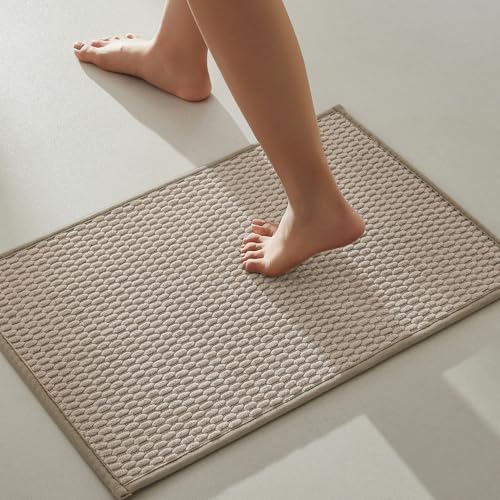 TYUU Bathroom Rugs Non Slip Washable, Beige 16×24 |
| Check price on Amazon |
Key takeaways
- Find bath mats that shed no dust with low-shed microfiber, memory foam, low-pile weave and stone options compared for grip, drying and easy washing.
A bath mat that leaves fibres and dust across the floor creates a second cleaning job every morning, and that trade-off matters more than softness alone. The real decision is not simply which mat feels plush underfoot, but which construction holds its fibres in place, dries before mildew can take hold, and stays put on smooth tile. A loose, high-pile rug can look inviting on day one and then shed constantly, while a tightly woven or solid surface can keep the bathroom visibly cleaner with far less effort.
This guide is for households that want a cleaner floor after every shower, for allergy-sensitive homes where airborne fibres are unwelcome, and for busy families who wash bathroom textiles often. Each product below was chosen from the name and specifications shown on its Amazon product page, with attention to fibre construction, backing, size, thickness, and care instructions, so the comparison rests on what the listing actually describes rather than on a vague promise of softness.
Quick Picks
As an Amazon Associate we earn from qualifying purchases
| Product | Best for | Key spec from title |
|---|---|---|
| Gorilla Grip Memory Foam Bath Rug, 24×17, Graphite Gray | Cushioned comfort on a compact bathroom floor | Three-quarter inch memory foam with velvet top |
| OLANLY Bathroom Rugs Mat 30×20, Grey | A larger low-shedding microfiber mat by the tub | Dense microfiber pile with TP rubber backing |
| Veeloim Stone Bath Mat, 23.6×15.4, Gray | A fibre-free step-out surface that dries fast | Diatomaceous earth stone mat with anti-slip sheet |
| TYUU Bathroom Rugs Non Slip Washable, Beige 16×24 | A thin low-pile mat for tight spaces and low doors | Low-pile woven mat with natural rubber backing |
How to Choose
Read the fibre construction before the colour
Fibre construction decides how much a bath mat will shed, so read that detail before choosing a colour or pattern. Tightly woven microfiber, a dense low pile, and a smooth velvet top tend to hold fibres far better than a loose shaggy pile with long strands that can break away at the ends. A listing that describes virtually no shedding or low-shedding fibres gives a useful starting point, although the pile height and weave still matter in daily use. Short, dense fibres also trap less household dust between washes, which keeps the surface looking cleaner and makes vacuuming or shaking the mat outside a quicker job.
Match the backing to your floor
Backing decides whether a mat stays in place on wet tile, and that choice matters as much as absorbency. Rubber and TP rubber backings grip smooth floors well, while silicone grip dots add traction without a full rubber sheet underneath. A stone mat needs a different solution, usually a separate rubber anti-slip sheet placed beneath the slab, because the hard surface cannot grip tile on its own. Check whether the backing is bonded through washing, because a backing that peels or cracks after a few cycles leaves a mat that slides. Also confirm that the backing suits the floor finish, since some adhesives and latex layers can mark certain surfaces over time.
Weigh drying speed against softness
Softness and drying speed pull in opposite directions, so the right balance depends on how the bathroom is used. Thick memory foam and deep plush pile feel gentle underfoot, yet they hold more water and need longer to dry between showers, especially in a bathroom without strong airflow. A low-pile woven mat or a porous stone slab dries far sooner, which helps prevent damp odours and mildew in a humid room. Households with back-to-back morning showers should favour faster drying, while a single-user bathroom with good ventilation can afford a thicker, softer mat. Hang a fabric mat over the tub edge or a rail when possible to speed drying.
Check size, thickness, and washing care together
Size, thickness, and washing care work as a set, and judging one without the others leads to poor fits. Measure the floor space in front of the tub or shower, then allow room for the door swing, because a mat that is too wide will bunch against the frame while a mat that is too small leaves wet footprints on bare tile. Thickness matters at doorways, where a mat above half an inch can catch a low door, while a thin mat near four-tenths of an inch slides under most doors easily. Finally, read the care line on the listing: machine washable mats suit frequent cleaning, whereas a stone mat needs rinsing or wiping instead of a wash cycle.
The 4 Best Options
Gorilla Grip Memory Foam Bath Rug, 24×17, Graphite Gray
- Best for: Cushioned comfort in a compact bathroom where a small, soft mat is enough.
- Size: 24 x 17 inches
- Thickness: three-quarter inch memory foam
- Top layer: soft velvet
- Underside: durable grip dots
Cushioned comfort in a compact bathroom where a small, soft mat is enough.
The 24 by 17 inch size covers one step-out spot only, so measure the space before ordering a larger layout.
This memory foam rug suits anyone who steps out of the shower onto cold tile and wants a cushioned landing without a large footprint. Its three-quarter inch foam layer contours gently underfoot, and the smooth velvet top avoids the loose strands that make some plush rugs shed across the floor. At 24 by 17 inches it fits a compact bathroom, a guest bathroom, or the space beside a single vanity, and the graphite gray colour hides everyday marks between washes. Machine washing keeps maintenance simple, while the dotted underside helps the mat hold its position on smooth floors during daily use.
OLANLY Bathroom Rugs Mat 30×20, Grey
- Best for: A larger low-shedding mat by the tub in a busy family bathroom.
- Size: 30 x 20 inches
- Material: 100 percent microfiber
- Pile: dense plush pile, nearly 1 inch high
- Backing: TP rubber, non-slip
A larger low-shedding mat by the tub in a busy family bathroom.
The plush pile needs air drying time after washing, so hang it where air can reach both sides.
This microfiber mat is the strongest choice for a household that wants a bigger step-out area without a trail of loose fibres. Its dense pile is described on the Amazon listing as virtually no shedding, with tightly woven, low-shedding fibres that help keep lint off the floor and out of the air. At 30 by 20 inches it covers the space in front of a standard tub more generously than a compact rug, and the TP rubber backing adds grip on smooth tile. The grey tone works with most bathroom schemes, and the mat washes on a cold gentle cycle, which suits a routine of frequent laundering.
Veeloim Stone Bath Mat, 23.6×15.4, Gray
- Best for: A fibre-free, fast-drying step-out surface in a humid bathroom.
- Size: 23.6 x 15.4 inches
- Thickness: 0.36 inches
- Material: 100 percent diatomaceous earth, also listed as diatomite
- Weight: 2.5 kilograms
A fibre-free, fast-drying step-out surface in a humid bathroom.
The hard surface feels firm and cool underfoot, so it suits buyers who value drying speed over cushioning.
This stone mat removes the shedding question entirely, because it contains no fabric fibres at all. Diatomaceous earth forms a porous slab that absorbs water on contact and then lets it evaporate, so the surface dries far sooner than a damp rug left on the floor. A textured top adds friction under wet feet, and a rubber anti-slip sheet goes underneath to hold the slab steady on smooth tile. At 23.6 by 15.4 inches it fits neatly in front of a tub or shower, and the included sandpaper refreshes the surface when marks build up over time.
TYUU Bathroom Rugs Non Slip Washable, Beige 16×24
- Best for: A thin low-pile mat for tight spaces, low doors, and small bathrooms.
- Size: 24 x 16 x 0.4 inches
- Surface: low-pile woven design
- Backing: natural rubber, non-slip
- Care: machine washable
A thin low-pile mat for tight spaces, low doors, and small bathrooms.
The compact size covers a single spot only, and the care guidance advises against tumble drying.
This thin woven mat fits bathrooms where a thick rug would jam under the door or crowd a narrow floor. Its low-pile woven surface holds far less loose fibre than a deep shaggy pile, and the short weave dries quickly after a shower, which helps in a small room with limited airflow. Natural rubber backing grips smooth tile and vinyl, while the 24 by 16 inch footprint suits a sink area, a compact tub front, or a narrow gap beside a vanity. Machine washing makes it easy to keep clean, and the beige tone blends with light tile and pale bathroom fittings.
Which One Fits Your Situation
You want the softest step out of the shower
Choose the Gorilla Grip memory foam rug when cushioning matters most and the bathroom is small. Its velvet top and three-quarter inch foam soften the step onto cold tile, while the compact 24 by 17 inch size fits a single step-out spot. Keep the door swing in mind, since the thicker foam needs a little clearance, and wash it regularly to keep the velvet top fresh.
You want the least lint on the floor
Choose the OLANLY microfiber mat when shedding is the main complaint and a larger mat is needed. Its tightly woven, low-shedding fibres and dense pile cover a 30 by 20 inch area without the loose strands of a shaggy rug. Wash it cold on a gentle cycle and allow drying time, because the plush pile holds more moisture than a thin woven mat.
You want no fibres at all
Choose the Veeloim stone mat when the goal is a surface that cannot shed, because diatomaceous earth has no fibres to lose. It absorbs water on contact, dries quickly, and wipes clean instead of going through a wash cycle. Place the included rubber sheet underneath for grip, and use the sandpaper when the surface needs refreshing after months of use.
You have a small bathroom or a low door
Choose the TYUU low-pile mat when space is tight and a thick rug would catch on the door. At four-tenths of an inch thick and 24 by 16 inches, it slides into narrow gaps and dries fast in a room with limited airflow. Its natural rubber backing holds it steady on tile, and machine washing keeps the thin weave easy to maintain.
Common Mistakes
- Choosing a deep shaggy pile for a low-dust goal, because long loose fibres shed more and trap dust between washes.
- Buying a mat without measuring the tub front and door swing, then finding it bunches, slides, or blocks the door.
- Placing a fabric mat on a damp floor and leaving it there, which slows drying and lets odours build up underneath.
- Washing a mat on a hot cycle or with bleach when the listing specifies cold water and no bleach, which can damage the pile and backing.
- Using a stone mat without its anti-slip sheet, or a fabric mat with a worn backing, and then stepping onto a surface that moves.
Frequently Asked Questions
Do low-shedding bath mats still need washing?
Yes, low-shedding mats still need regular washing, because they collect moisture, soap residue, and household dust even when they lose few fibres. A cold gentle wash for microfiber or a rinse and wipe for a stone mat keeps the surface hygienic and helps the backing last longer. Let the mat dry fully between uses, and hang a fabric mat where air can reach both sides after washing.
Is a stone bath mat better than a fabric mat for dust?
A stone mat is better for a strict no-fibre goal, because diatomaceous earth contains no fabric fibres to shed or trap dust. It absorbs water and dries quickly, and cleaning means rinsing or wiping rather than laundering. A fabric mat can still work well when its fibres are tightly woven and low shedding, but it will always carry some fibre and need washing.
Why does my bath mat shed even after several washes?
Shedding after several washes usually points to a loose pile or fibres that were never locked tightly into the weave. Long shaggy strands break at the ends with wear, and harsh washing can speed that process. A tightly woven low-pile mat, a smooth velvet top, or a solid stone surface sheds far less, so the construction matters more than the number of washes.
How do I keep a bath mat from sliding on tile?
Grip comes from the backing, so choose rubber, TP rubber, or silicone grip dots matched to a smooth clean floor. Place the mat flat without folds, and check that the backing has not cracked or peeled after washing. For a stone mat, always use the included rubber anti-slip sheet underneath, and keep both the floor and the sheet dry before stepping on.