Key takeaways
- Compare the 5 best electric kitchen composters for odor-free countertop recycling, from compact 2-liter models to a 14-liter microbial composter.
A kitchen that turns out three meals a day also turns out a steady stream of peels, coffee grounds, eggshells, and leftovers. The real decision is not whether to keep that waste out of the trash, but which machine fits the way you cook: how much waste your household makes, how much counter space you can give up, and whether you want finished material for plants or simply less garbage to carry out each week.
This guide is for apartment dwellers without outdoor space, home cooks who prep most meals from scratch, and gardeners who want usable material for beds and pots. Every model below is an electric kitchen composter sold on Amazon, chosen from its listing details: capacity, cycle style, filtration, and footprint.
Quick Picks
As an Amazon Associate we earn from qualifying purchases.
| Product | Best for | Key spec |
|---|---|---|
| Lomi 2 | App-connected households that want guided cycles | 3L bucket, Eco Express mode in 3 to 5 hours |
| Vitamix FoodCycler FC-50 | Small households and tight counters | 2L capacity, compact countertop footprint |
| Reencle Prime | Families wanting real compost, not dried waste | 14L capacity, up to 2.2 lbs of waste daily |
| FoodCycler Eco 5 | Larger batches from frequent cooking | 5L capacity, 500-watt VORTECH grinding |
| The Lab Made LMCM | Simple set-and-forget daily cycles | 3.5L capacity, 24-hour cycle |
How to Choose
Match Capacity to How Much You Actually Cook
Capacity is the first filter because it decides how often you run the machine and how often you empty it. A household of one or two that cooks a few times a week rarely fills a 2-liter bucket between cycles, so a compact unit stays out of the way and finishes quickly. A family that preps fresh produce every night fills a small bucket in a single dinner, which means back-to-back cycles and constant emptying. Look at your scrap bowl for a week before you buy: if it overflows daily, step up to a 5-liter or larger chamber, and if it stays half empty, the smaller machine will serve you better and take up less counter.
Drying and Grinding Versus Microbial Composting
Most countertop units dry and grind scraps into a light, soil-like material, while a smaller group uses microbes to break waste down into genuine compost over a day or more. The drying style works fast, often in a few hours, and accepts a wide range of scraps, but its output still needs to cure in soil or a compost pile before it behaves like finished compost. The microbial style takes longer and needs its microbial culture maintained, yet the material that comes out is closer to garden-ready compost. Choose the drying style when speed and simplicity matter most, and the microbial style when your goal is usable compost for plants.
Odor Control and Filters Decide Whether It Stays on the Counter
An electric composter lives in the room where you eat, so odor control matters as much as capacity. Carbon filters are the standard defense, trapping smells as hot air leaves the chamber, and they need replacing on a schedule set by how often you run cycles. A sealed lid and a filter housing that fits tightly make the difference between a machine you forget about and one you move to the garage. Before buying, check how the filter is replaced, whether refills are sold separately, and how often the maker says to change it, because a neglected filter is the most common reason a composter begins to smell.
Footprint, Noise, and Where the Machine Lives
Countertop composters range from compact boxes that tuck beside a coffee maker to floor-standing units the size of a small trash can. Measure the spot you have in mind, including the height under wall cabinets, because several models need lid clearance to open fully. Noise matters too: drying cycles run fans and grinding mechanisms for hours, so a unit that runs overnight in an open-plan kitchen should be quiet enough not to carry into bedrooms. Think about where the finished material goes as well, since a machine near the back door makes it easy to carry output straight to the garden.
The 5 Best Options
Lomi 2

The Lomi 2 suits households that like guidance and want the machine to handle decisions for them. Its app connection walks through setup, tracks cycles, and lets you pick between a fast Eco Express mode and a longer Grow Mode that produces garden-ready material. The 3-liter bucket holds a full day of scraps for most small families, and the activated charcoal filter keeps the unit odor-free on the counter. It accepts fruit, meat, dairy, bread, and yard waste, so very little needs sorting before it goes in. The footprint is larger than the most compact units, so it fits best in kitchens with a clear stretch of counter to spare.
Specs
- 3L removable bucket
- Eco Express mode runs 3 to 5 hours
- Grow Mode runs 16 to 20 hours
- App-connected over WiFi
- Dimensions 16 x 13 x 12 inches
- Activated charcoal filter
- Accepts fruit, meat, dairy, bread, and yard waste
Best for: Households that want app-guided cycles and two distinct modes for fast drying or garden-ready output.
Watch out for: The unit needs its filter changed on schedule to stay odor-free, and the app setup adds a step that simpler machines skip.
Vitamix FoodCycler FC-50

The FoodCycler FC-50 is the compact pick for small households and tight counters. Its 2-liter bucket matches the daily scraps of one or two people, and the unit takes up little more space than a small kitchen appliance. The removable bucket lifts out for filling at the cutting board and for emptying after a cycle, and the carbon filter system keeps smells contained while it runs. Because the chamber is small, cycles finish quickly and the machine uses less energy per run than larger models. It is a straightforward choice when you want the category’s most proven compact design without extra features to manage.
Specs
- 2L capacity
- Model FC-50-SP
- Slate finish
- Removable bucket
- Carbon filter system
- Compact countertop footprint
Best for: One- or two-person households with limited counter space that want a simple, compact recycler.
Watch out for: The 2-liter chamber fills fast in a busy family kitchen, so larger households will run it far more often than a bigger model.
Reencle Prime

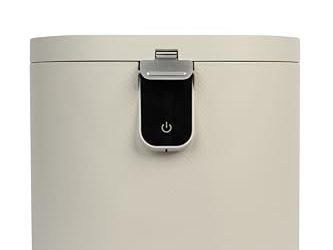
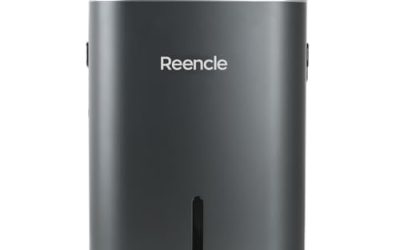
The Reencle Prime is the pick for buyers who want genuine compost rather than dried grounds. Its chamber uses microbes to break down scraps continuously, handling up to 2.2 lbs of food waste each day, and the finished material comes out ready for garden use. The 14-liter capacity is the largest here, so it suits families that generate a lot of waste and want to add scraps at any time without waiting for a cycle to finish. A three-layer filtration system and whisper-quiet operation keep it unobtrusive in the kitchen, and the sensor-activated lid opens with a wave of the hand when your hands are full of peelings.
Specs
- 14L capacity
- Decomposes up to 2.2 lbs of food waste daily
- Microbial breakdown into real compost
- Whisper-quiet operation
- 3-layer filtration system
- Sensor-activated lid
- Initial culture and accessories included
Best for: Families and keen gardeners who want true compost and the freedom to add scraps continuously.
Watch out for: Microbial composting needs its culture kept healthy, and the unit is larger and heavier than drying-style countertop models.
FoodCycler Eco 5

The FoodCycler Eco 5 bridges the gap between compact recyclers and family-size machines. Its 5-liter bucket swallows a full day of prep waste from a household that cooks most nights, and the VORTECH grinding system powers through tough items such as small bones and fibrous peels. A refillable carbon filter keeps odors in check without disposable cartridges, and the unit runs quietly enough for evening cycles. The larger chamber means fewer runs per week than the 2-liter models, which matters when the machine sits in a kitchen that is already busy at dinner time.
Specs
- 5L capacity
- 500 watts
- VORTECH grinding system
- Refillable carbon filter
- Quiet operation
- Available in Grey and White
Best for: Households that cook most nights and want a larger chamber with fewer cycles per week.
Watch out for: At 5 liters the unit is heavy when full, so plan a permanent spot on the counter rather than moving it in and out of a cabinet.
The Lab Made LMCM

The Lab Made LMCM is the simplest machine in this list, built around a single 24-hour cycle that you switch on and leave alone. Its 3.5-liter chamber holds a day of scraps for a small household, and the unit accepts meat and dairy alongside fruit and vegetable waste. Quiet low-noise operation suits kitchens that run the machine overnight, and the odorless design means it can sit on the counter without drawing attention. With no app and no mode menu to learn, it fits buyers who want the category’s most set-and-forget experience at a smaller footprint than the family-size models.
Specs
- 3.5L capacity
- 24-hour cycle
- Odorless operation
- Meat and dairy safe
- Quiet low-noise operation
- Turns food waste into fertilizer
Best for: Buyers who want one simple daily cycle with no app, no modes, and no learning curve.
Watch out for: The 24-hour cycle is slower than the fast modes on other machines, so it suits steady daily waste rather than large single batches.
Which One Fits Your Situation
You Live Alone or With One Other Person
Pick the Vitamix FoodCycler FC-50. A 2-liter chamber matches the scraps of a small household without wasting counter space or energy on half-empty cycles, and the compact footprint fits kitchens where every inch counts. The Lab Made LMCM is the fallback when you would rather run one slow overnight cycle than several short ones.
Your Family Cooks Fresh Meals Most Nights
Pick the FoodCycler Eco 5 for its 5-liter chamber, or the Reencle Prime when your waste is heavier still. Both handle a full evening of prep scraps in one go, so nobody has to run the machine twice after dinner. The Eco 5 suits families that want fast drying cycles, while the Prime suits families that also garden and want real compost.
You Garden and Want Usable Material for Plants
Pick the Reencle Prime. Its microbial process produces genuine compost that can go straight into beds and pots, and its 14-liter chamber keeps up with a household that also feeds a garden. The Lomi 2 in Grow Mode is the second choice, since its longer cycle produces garden-ready material rather than plain dried grounds.
You Share a Kitchen or a Small Workspace
Pick the Lomi 2 or the FoodCycler FC-50. Both stay odor-free with a maintained filter, run quietly enough for shared spaces, and look at home on a counter that other people use. Avoid the largest models here, since a shared kitchen rarely has the spare footprint or the single owner to maintain a microbial culture.
Common Mistakes
- Buying the largest capacity when you cook for one person, which leaves the chamber half empty and wastes counter space.
- Adding liquids, cooking oil, or oversized bones to a drying unit that is built for solid scraps.
- Forgetting to change the carbon filter, which is the most common reason a composter begins to smell.
- Treating dried output as finished compost and digging it straight into pots without letting it cure in soil first.
- Placing the unit under low cabinets without checking lid clearance, then finding the lid cannot open fully.
Frequently Asked Questions
Do electric kitchen composters make real compost?
It depends on the technology inside. Drying and grinding units produce a dry, soil-like material that still needs to cure in soil or a compost pile before it behaves like finished compost. Microbial units such as the Reencle Prime break waste down with living cultures, so their output is much closer to genuine compost. Check the listing description to see which type a model uses before you buy.
What can you put in an electric composter?
Most electric composters accept fruit and vegetable scraps, eggshells, coffee grounds, bread, and small amounts of meat and dairy. Large bones, pits, liquids, and cooking oil are usually excluded, and paper or compostable packaging is only accepted by some models. Always check the specific model’s accepted-items list, because putting the wrong item in can jam the grinder or stall a microbial culture.
How long does a cycle take?
Cycle times vary widely by model and mode. Fast drying modes finish in about 3 to 5 hours, standard drying cycles run for several hours, and microbial composters work continuously over a day or more. The right cycle for you depends on how much waste you produce each day and whether you run the machine overnight or between meals.
Do electric kitchen composters smell?
A well-maintained unit with a fresh carbon filter should not smell during normal use. Odor usually appears when the filter is past its change date, when the lid seal is dirty, or when waste sits in the chamber for days before a cycle runs. Change filters on the schedule the maker gives, wipe the lid seal regularly, and run cycles promptly to keep the kitchen smelling neutral.