Key takeaways
- Five commercial basement dehumidifiers with built-in pumps, compared on AHAM capacity, coverage and the lowest temperatures they can keep working in.
Cold basements punish the wrong dehumidifier twice: coils ice over as temperatures fall toward freezing, and a full bucket shuts the unit down before the space is dry. The real decision is whether a machine keeps removing water at 34 degrees while draining itself unattended, and how much capacity remains once you read the AHAM figure instead of the saturation headline. Commercial refrigerant models built for crawl spaces answer both problems, but their low-temperature floors, pump lifts and coverage claims differ enough to change which one belongs under your house.
This roundup serves three kinds of buyers: owners of unfinished basements that stay cold all winter, anyone drying a crawl space with no floor drain nearby, and landlords or property managers who need a unit that runs for weeks without a visit. Every model below is a commercial-grade machine with a built-in pump, chosen from the names and specifications on its Amazon listing page, with every figure taken from those listings rather than brand marketing.
Quick Picks
As an Amazon Associate we earn from qualifying purchases
| Product | Best for | Key spec from title |
|---|---|---|
| ALORAIR Sentinel HDi90 | Cold crawl spaces that need pumped drainage | 90 pints per day at AHAM |
| ALORAIR Storm LGR Extreme | Flood cleanup with a long pump reach | 85 pints per day at AHAM |
| ALORAIR Sentinel HDi120 | The largest cold basements and crawl spaces | Up to 3,300 sq ft coverage |
| BlueDri BD-76P | Garages and job sites as well as basements | 76 pints per day at AHAM |
| ALORAIR Storm 80X | Moving between several damp rooms | 80 pints per day at AHAM |
How to Choose
Start With the Lowest Temperature Your Basement Reaches
A dehumidifier only earns its place in a cold basement if its coils keep working near freezing. Four of the five models here state an operating floor of 33.8 degrees Fahrenheit, while the ALORAIR Storm 80X stops at 35.6 degrees, the highest minimum in this group. That small gap matters in an unheated space that hovers just above freezing for weeks. Automatic defrost, stated on the Sentinel HDi120 and Storm 80X listings, is the feature that lets a unit thaw its coils and keep cycling instead of shutting down or icing solid. Check the stated range against your coldest corner before comparing anything else.
Compare AHAM Pints, Not the Saturation Headline
Every listing here advertises two capacities, and the bigger one is measured in hot, saturated air that no basement ever reaches. The Sentinel HDi90 headline of 198 pints shrinks to 90 pints at AHAM conditions, and the BlueDri BD-76P drops from 150 pints at saturation to 76 pints at AHAM. Size the space with the AHAM figure, then cross-check the stated coverage where a listing gives one: 3,300 square feet for the HDi120, 2,600 for the HDi90, 2,300 for the Storm LGR Extreme and 2,100 for the Storm 80X. BlueDri states no coverage area at all, so judge that model on capacity alone.
Insist on a Built-In Pump and Check Its Reach
A bucket or gravity hose chains the machine to the lowest point in the room, which is rarely where the damp is worst. All five models here carry a built-in condensate pump, so the unit can sit where the moisture is and push water to a sink, a drain or a window. Reach still varies in the details the listings state. The Storm LGR Extreme lists a 19.6 foot drain hose with 14.7 feet of vertical lift, and the Storm 80X lists the same hose length, while the other three simply state a pump with hose included. Measure your discharge route before ordering.
Plan the Carry Down the Stairs Before It Arrives
Commercial machines are dense boxes, and the listings here run from 63.9 pounds for the Storm 80X up to 81 pounds for the BlueDri BD-76P, with footprints as wide as 23.8 inches. A narrow basement stair or a tight crawl-space hatch can rule a model out before capacity ever matters, so measure both the route and the resting spot. Airflow also separates the group: the BlueDri moves 235 CFM, the HDi90 and the LGR Extreme move 210 CFM, and the Storm 80X moves 200 CFM. Higher airflow suits long, open floor plans where air must travel.
The 5 Best Options
ALORAIR Sentinel HDi90

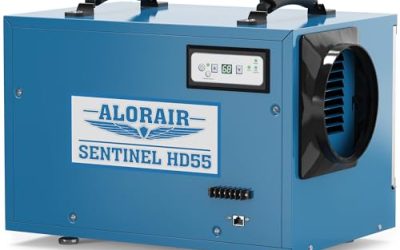
The HDi90 is the balanced pick for a basement or crawl space that needs serious drying without the largest footprint in the group. Its listing states 90 pints per day at AHAM and up to 2,600 square feet of coverage, with a built-in condensate pump and drain hose so it can run unattended for weeks. At 70.5 pounds and 23.2 by 15.2 by 17.7 inches, it is still a two-person carry, but it remains a manageable size for a crawl-space hatch. Buyers fighting chronic damp rather than flood water will find this capacity easier to live with day to day.
Specs
- Capacity: 90 pints per day at AHAM; 198 pints per day at saturation
- Coverage: up to 2,600 sq ft
- Operating temperature range: 33.8 to 104°F
- Drainage: built-in condensate pump; drain hose included
- Airflow: 210 CFM
- Dimensions: 23.2 x 15.2 x 17.7 in
- Weight: 70.5 lb
Best for: Owners of cold crawl spaces and mid-size basements who want pumped drainage and mid-pack capacity.
Watch out for: Listing copies disagree on the low-temperature floor — one bullet says 36°F while the spec table states 33.8°F — and availability signals conflict between sellers, so confirm both the temperature range and a live buy option on the listing before ordering.
ASIN: B01LW8WRUP
ALORAIR Storm LGR Extreme

Built around LGR refrigerant technology, the Storm LGR Extreme is aimed at drying after leaks and flooding as much as everyday humidity control. The listing states 85 pints per day at AHAM, 180 pints at saturation and coverage up to 2,300 square feet, with an operating range that starts at 33.8 degrees. Its pump is the best documented in this group: a 19.6 foot drain hose and 14.7 feet of vertical lift, enough to reach a utility sink from most basement floors. A five-year limited warranty, stated in the listing title, rounds out a restoration-leaning package.
Specs
- Capacity: 85 pints per day at AHAM; 180 pints per day at saturation
- Coverage: up to 2,300 sq ft
- Operating temperature range: 33.8 to 104°F
- Drainage: built-in pump; 19.6 ft drain hose; 14.7 ft vertical lift
- Airflow: 210 CFM
- Dimensions: 22.8 x 13.7 x 17.3 in
- Warranty: 5-year limited warranty
Best for: Post-leak and flood cleanup in basements where the pump must push water up to a sink or drain.
Watch out for: The retrieved listing data does not state a unit weight, so confirm the weight on the live listing before planning a solo carry down basement stairs.
ASIN: B07PWKPSBZ
ALORAIR Sentinel HDi120
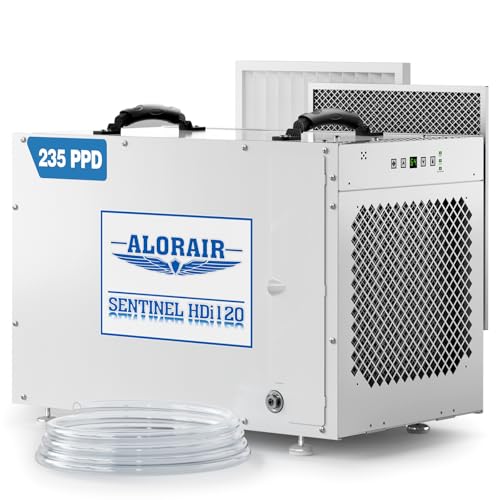
The HDi120 is the capacity leader here, rated by its listing at 120 pints per day at AHAM and 235 pints at saturation, with coverage up to 3,300 square feet. Automatic defrost and a stated floor of 33.8 degrees keep it working through cold snaps, and memory start brings it back on its previous settings after a power cut, a detail that matters for a machine left running in an empty house. A built-in pump with drain hose handles disposal. At 80.3 pounds it is the heaviest Sentinel in this roundup, so plan the route downstairs.
Specs
- Capacity: 120 pints per day at AHAM; 235 pints per day at saturation
- Coverage: up to 3,300 sq ft
- Minimum operating temperature: 33.8°F
- Drainage: built-in pump with drain hose
- Features: automatic defrost; memory start; cETL listed
- Dimensions: 23.8 x 14 x 15.9 in
- Weight: 80.3 lb
Best for: The largest cold basements and crawl spaces, and empty properties that need unattended drying.
Watch out for: A crawl of this listing showed no featured offers available, so check that a live buy option exists before planning a purchase around this model.
ASIN: B08DLRZYT5
BlueDri BD-76P
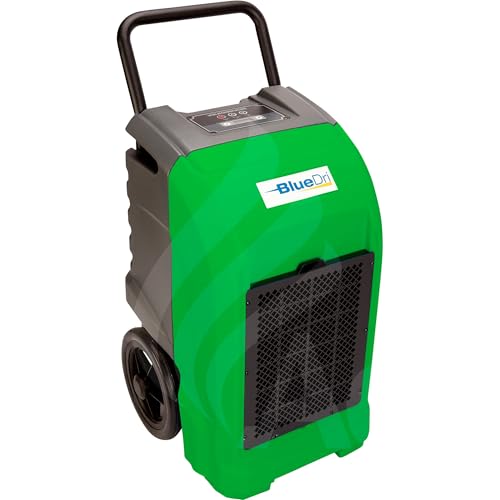
The BD-76P is the job-site entry in this group, a roto-molded commercial unit whose listing also names garages and water-damage work alongside basements. Its stated operating range starts at 33 degrees, the lowest floor here, and its automatic internal pump feeds a drainage hose for continuous running. Capacity is 76 pints per day at AHAM, measured at 80 degrees and 60 percent relative humidity, rising to 150 pints at saturation. Airflow is the strongest in this roundup at 235 CFM. The trade-off is bulk: at 32 inches tall and 81 pounds, it is the largest and heaviest pick.
Specs
- Capacity: 76 pints per day at AHAM; 150 pints per day at saturation
- Operating temperature range: 33 to 100°F
- Drainage: automatic internal pump with drainage hose
- Airflow: 235 CFM
- Power: 7.3 amps; 839.5 W
- Refrigerant: R410A
- Dimensions: 19 x 20 x 32 in
- Weight: 81 lb
- Housing: roto-molded polyethylene; C-ETL-US listed
Best for: Garages, workshops and job sites that share duty with a cold basement.
Watch out for: The listing does not state a coverage area, so size it by its AHAM capacity rather than a square-foot claim, and confirm the 32-inch height clears your stairwell turns.
ASIN: B00I51W3FQ
ALORAIR Storm 80X

The Storm 80X is the easiest of these five to live with between jobs: at 63.9 pounds it is the lightest here, its rotomolded housing stacks, and wheels are built in for moving it from room to room. The listing states 80 pints per day at AHAM, 170 pints at saturation and coverage up to 2,100 square feet, with a built-in condensate pump and a 19.6 foot drain hose. The compromise is cold tolerance: its stated operating range starts at 35.6 degrees, higher than the 33.8 degree floor of the Sentinel models and the LGR Extreme.
Specs
- Capacity: 80 pints per day at AHAM; 170 pints per day at saturation
- Coverage: up to 2,100 sq ft
- Operating temperature range: 35.6 to 102.2°F
- Drainage: built-in condensate pump; 19.6 ft drain hose
- Airflow: 200 CFM
- Dimensions: 15.2 x 14.4 x 24.8 in
- Weight: 63.9 lb
- Housing: stackable rotomolded housing with wheels; auto defrost
Best for: Owners who will move one unit between a basement, garage and crawl space as damp shifts.
Watch out for: Its 35.6°F minimum is the highest of the five, so skip it for spaces that sit below that; also confirm you are on the B0DH3G92CX listing, since the same model appears under more than one ASIN.
ASIN: B0DH3G92CX
Which One Fits Your Situation
Your Basement Stays Cold but Rarely Floods
Choose between the Sentinel HDi90 and the Storm LGR Extreme. Both state a 33.8 degree operating floor and built-in pumps, so either can run unattended through winter. The HDi90 suits steady, chronic damp in spaces up to its stated 2,600 square feet; the LGR Extreme adds the strongest documented pump lift for a sink discharge.
A Large Crawl Space With No Floor Drain
The Sentinel HDi120 is the natural fit: the listing claims up to 3,300 square feet of coverage, the highest AHAM capacity here, and a built-in pump that removes the need for a gravity drain. Memory start restarts it after outages, which suits a space nobody visits often. Confirm a live buy option first, since one crawl showed no featured offers.
A Garage or Workshop Shares the Duty
Pick the BlueDri BD-76P. Its listing names garages and job sites as well as basements, its roto-molded housing tolerates knocks, and its range starts at 33 degrees, the lowest here. Strong 235 CFM airflow suits open, draughty spaces. Just be ready for the carry: 81 pounds and a 32-inch-tall body are the most awkward in this group.
You Need One Unit for Several Damp Rooms
The Storm 80X is built for moving: wheels, a stackable rotomolded body and the lowest weight here at 63.9 pounds. Its pump and 19.6 foot hose let it work in whichever room is dampest that week. Only rule it out where temperatures fall below its stated 35.6 degree minimum, which is the highest floor in this group.
Common Mistakes
- Sizing by the saturation pint figure: the hot-air headline can be more than double the AHAM capacity, so a unit that looks oversized on paper may only just cope in a real basement.
- Ignoring the minimum operating temperature, then discovering the coils ice over during the first cold snap that drops below the stated floor.
- Assuming every drain hose means a pump: gravity drainage only runs downhill, so check for a built-in pump and its stated lift before choosing where the unit will sit.
- Placing the discharge point higher than the pump can push, or farther away than the supplied hose reaches.
- Comparing coverage claims across brands as if they were measured identically, or trusting a square-foot figure for a model whose listing never states one.
Frequently Asked Questions
Can these dehumidifiers really run in a near-freezing basement?
Within their stated limits, yes. Four of the five listings give an operating floor of 33.8 degrees Fahrenheit or lower, and the BlueDri range starts at 33 degrees. Automatic defrost cycles the coils clear so drying can continue. Below the stated floor a unit will protect itself or ice up, which is why the Storm 80X, rated from 35.6 degrees, is wrong for the coldest spaces.
Why do listings show two different pint capacities?
The larger figure is measured at saturation, in hot air at maximum humidity, while the AHAM figure uses milder standard conditions that sit closer to a real basement. The HDi90, for example, claims 198 pints at saturation but 90 pints at AHAM. Compare models on the AHAM number only, or you will oversize on paper and still end up with a damp basement.
Do I still need a floor drain with a built-in pump?
No. Every model in this roundup has a built-in condensate pump that pushes water through a hose to a sink, a standpipe or an outside discharge point. What matters is reach: the Storm LGR Extreme states 14.7 feet of vertical lift on a 19.6 foot hose, while the other listings state a pump and hose without lift figures, so measure your route before ordering.
How large a basement can one of these units handle?
Going by the coverage the listings state, the Sentinel HDi120 leads at up to 3,300 square feet, followed by the HDi90 at 2,600, the Storm LGR Extreme at 2,300 and the Storm 80X at 2,100. BlueDri states no coverage figure for the BD-76P, so treat its 76 pints at AHAM as the guide. Very wet spaces effectively shrink every rating.