Key takeaways
- Find the best garden netting for raised beds: fine mesh pest barriers, generous sheet sizes, and cut-to-fit polyethylene covers for vegetables and rows.
A raised bed concentrates your best soil, your most careful watering, and your youngest plants into one tidy rectangle, which is exactly why pests find it so attractive. Cabbage white butterflies, flea beetles, aphids, and birds all treat a raised bed like a served buffet, and a single unprotected weekend can strip seedlings that took weeks to raise. Fine garden netting changes that equation: it lays a physical barrier over the bed that keeps insects and birds off the crop while still letting light, air, and rain reach the plants. The trade-off is convenience. Netting has to be lifted or pegged back every time you weed, thin, or harvest, and a sheet that is too small, too coarse, or too flimsy turns a simple job into a daily wrestling match.


This guide is for raised bed gardeners who want that protection without the frustration. It compares three netting sheets that differ in size, mesh, and format: a compact single sheet for one or two standard beds, a two-pack of large sheets for gardeners running several beds at once, and one very long roll for long beds, row covers, and season-after-season cutting. Every pick below was chosen from its Amazon listing name and specifications only, with attention to sheet dimensions, mesh fineness, and material, so you can match a sheet to the way your beds are actually laid out.
Quick Picks
Our Short List of 3
- Best for: gardeners with one or two standard raised beds who want a light, easy-handling cover.
- Brand: SUNPRO
- Model Number: SP-GN-01
- Sheet size: 8 x 24 ft
- Material: ultra-fine polyethylene (PE) mesh
- Best for: gardeners running several raised beds who need simultaneous coverage and a spare sheet.
- Brand: RIFNY
- Model Number: GN-10-33-2
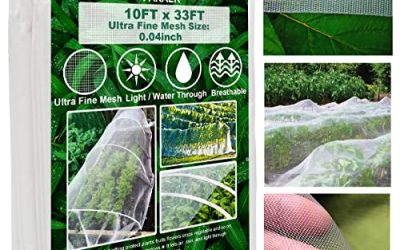
- Sheet size: 10 x 33 ft per sheet, 2 sheets included
- Mesh size: 0.04 inch, ultra-fine

- Best for: long raised beds, row covers, and gardeners who want one roll to cut from all season.
- Brand: KLEWEE
- Model Number: not stated in listing
- Sheet size: 10 x 50 ft
- Mesh size: approx. 0.8 mm x 0.8 mm (80 mesh), ultra-fine
All 3 Picks at a Glance
| Product | Specs | Action |
|---|---|---|
| SUNPRO Garden Netting Pest Barrier, 8 x 24 ft (SP-GN-01) |
| Check price on Amazon |
| RIFNY Garden Netting, 2 Pack 10 x 33 ft (GN-10-33-2) |
| Check price on Amazon |
| KLEWEE Garden Mesh Netting, 10 x 50 ft |
| Check price on Amazon |
How to Choose
Mesh size decides which pests you stop
Netting only works when the holes are smaller than the pest. Ultra-fine mesh, around 0.8 mm to 0.04 inch, blocks flea beetles, aphids, and the butterflies whose caterpillars shred brassicas, while still passing rain and a good share of sunlight. A coarser net may keep birds off ripening fruit but lets small insects walk straight through, so match the mesh to the pest that actually troubles your beds rather than buying the first sheet you see.
Sheet size should exceed the bed, not equal it
A net that exactly matches the bed’s footprint cannot drape over the crop or be anchored at the edges. You need spare material on every side so the sheet can tent over growing plants, reach the ground or the bed frame, and be weighted or pegged down with no gaps. Measure your bed, then add drape allowance for plant height and anchoring. Buying one oversized sheet and cutting it down is usually easier than piecing together undersized offcuts.
Material and weight affect handling
All three picks here are polyethylene mesh, a light synthetic that resists rot and can be rinsed and reused. Lighter sheets are easier to lift for harvest but blow around in wind until they are secured, while heavier or larger sheets cover more area per piece but are awkward to handle alone. Consider how often you will remove and replace the cover, because a sheet you dread handling is a sheet that stays off the bed.
Single sheet, multi-pack, or long roll
Format follows garden layout. A single mid-size sheet suits one or two beds. A two-pack lets you cover several beds simultaneously during peak pest pressure, or keep a spare while one sheet is washed. A long roll is the economical shape for long beds and row covers, and it leaves you material for repairs and for smaller frames later in the season.
The 3 Best Options
SUNPRO Garden Netting Pest Barrier, 8 x 24 ft (SP-GN-01)
- Best for: gardeners with one or two standard raised beds who want a light, easy-handling cover.
- Brand: SUNPRO
- Model Number: SP-GN-01
- Sheet size: 8 x 24 ft
- Material: ultra-fine polyethylene (PE) mesh
gardeners with one or two standard raised beds who want a light, easy-handling cover.
a single sheet means only one bed is protected at a time, and the light fabric needs secure anchoring in windy spots.
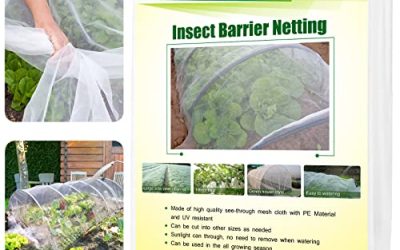
The SUNPRO Garden Netting Pest Barrier is the straightforward starting point: one ultra-fine polyethylene sheet measuring 8 by 24 feet, light enough at 15.8 ounces to drape, lift, and reposition without help. That footprint covers a standard 4 by 8 foot raised bed with generous drape on every side, or stretches along a longer bed as a row cover, and the listing notes it can be cut to size so offcuts can serve smaller frames and plant covers.
Because the sheet is a single piece, it suits gardeners who protect one main bed at a time and move the cover as crops rotate. The ultra-fine mesh is the right class of barrier for the small insects that trouble seedlings and leafy greens, and the light weight makes the daily lift-and-replace routine realistic rather than a chore you start skipping.
RIFNY Garden Netting, 2 Pack 10 x 33 ft (GN-10-33-2)
- Best for: gardeners running several raised beds who need simultaneous coverage and a spare sheet.
- Brand: RIFNY
- Model Number: GN-10-33-2
- Sheet size: 10 x 33 ft per sheet, 2 sheets included
- Mesh size: 0.04 inch, ultra-fine
gardeners running several raised beds who need simultaneous coverage and a spare sheet.
the large sheets are more than a single small bed needs, so expect to cut them down and store the surplus.
The RIFNY Garden Netting 2 Pack doubles the format: two polyethylene sheets, each 10 by 33 feet, with a stated mesh size of 0.04 inch. That is a lot of coverage in one purchase, enough to dress several raised beds at once during the weeks when pest pressure peaks, and the listing positions the sheets for raised beds, vegetable gardens, and row covers alike.
The explicit 0.04-inch mesh figure is the detail to note here, because it tells you exactly which class of pest the barrier targets: small flying and crawling insects rather than only birds. With two sheets in hand you can also rotate covers, keeping one on the beds while the other is rinsed or repaired, which keeps protection continuous through the season.
KLEWEE Garden Mesh Netting, 10 x 50 ft
- Best for: long raised beds, row covers, and gardeners who want one roll to cut from all season.
- Brand: KLEWEE
- Model Number: not stated in listing
- Sheet size: 10 x 50 ft
- Mesh size: approx. 0.8 mm x 0.8 mm (80 mesh), ultra-fine
long raised beds, row covers, and gardeners who want one roll to cut from all season.
a 50-foot sheet is bulky to unroll and cut alone, and you will need storage space for the unused length.
The KLEWEE Garden Mesh Netting is the big-coverage option, a single polyethylene sheet 10 feet wide and 50 feet long with an ultra-fine mesh of approximately 0.8 mm by 0.8 mm, described as 80 mesh. That length covers long raised beds end to end without seams, runs down a full row cover, or yields multiple bed-sized pieces with material left over for patching and for covering individual plants.
The listing describes the mesh as reusable, which fits the roll format: you cut what each bed needs, and the remainder stays in storage for the next planting. The very fine stated mesh puts it in the same small-insect barrier class as the other picks, so the choice between them comes down to how much area you need to cover and how you prefer to handle the material, not to a difference in purpose.
Which One Fits Your Situation
You have one main bed and want the simplest routine
Choose the SUNPRO sheet. Its 8 by 24 foot size drapes a standard bed with room to spare, and its light weight makes the daily lift for watering checks, thinning, and harvest quick enough that you will actually keep it on.
You run several beds and pests arrive all at once
Choose the RIFNY 2-pack. Two large sheets let you cover multiple beds in the same afternoon instead of protecting one bed and leaving the rest exposed, and the spare sheet keeps coverage going when one is being cleaned.
You garden in long beds or rebuild layouts each season
Choose the KLEWEE roll. Fifty feet of cut-to-size mesh adapts to whatever layout you plant this year, covers long beds without joins, and leaves material in reserve for repairs and small covers.
You mainly fight tiny insects on seedlings and greens
Any of the three fits, since all use ultra-fine mesh. Decide by area: SUNPRO for a bed or two, RIFNY for several beds at once, KLEWEE for the largest total coverage.
Common Mistakes
- Buying a sheet the same size as the bed, leaving nothing to drape over plants or anchor at the edges.
- Choosing coarse mesh when the real problem is flea beetles or aphids, which pass through bird-grade netting.
- Laying netting directly on foliage with no slack, so growth pushes plants into the mesh and pests reach leaves through it.
- Leaving gaps at the corners and edges where the sheet is not weighted or pegged down.
- Forgetting to lift the cover for pollination-dependent crops at flowering time, or leaving it off afterward and losing protection.
Frequently Asked Questions
Does fine netting block sunlight and rain?
Ultra-fine mesh shades plants only slightly and lets rain pass through, which is why it can stay on beds for weeks. The sheets in this guide are all in that fine class, so watering from above still reaches the soil.
Can I cut these sheets to fit my bed?
Yes. All three listings describe cut-to-size use, and cutting is the normal way to fit one sheet to a bed, split a large sheet across two beds, or make small covers for individual plants.
How do I keep netting from blowing off?
Give the sheet enough drape to reach past the bed edges, then anchor it with soil, stones, bricks, clips, or pegs along every side. Gaps at the edges are where both wind and pests get in, so continuous anchoring matters more than a few heavy weights.
When should netting go on and come off?
Put it on at planting or transplanting, before pests find the crop, and keep it on until harvest for leafy and root crops. For crops that need insect pollination, lift the cover during flowering, then replace it if pest pressure continues.
Related guides
- Best deer fencing kits for gardens
- Best garden hoses for raised bed watering
- Best sprinklers for raised garden beds
- Best wood for raised garden beds
As an Amazon Associate, we earn from qualifying purchases.