Our Short List of 3

- Best for: Compound bow hunters who want a 2-inch cut with no collar to inspect or replace.
- Model: R38100
- Weight: 100 grain
- Variant covered by this ASIN: 100 grain, 3-pack
- Blades: 2 blades, .035-inch thick stainless steel, swept-back angle

- Best for: Experienced Rage users with heavier setups who want the widest cut in the line.
- Weight: 100 grain
- Variant covered by this ASIN: 100 grain, 3-pack
- Blades: 2 blades, .035-inch stainless steel
- Cutting diameter: 2+ inch expandable cut

- Best for: Hunters who expect quartering shots and want a tip that stands up to bone contact.
- Part number: 60100
- Weight: 100 grain
- Variant covered by this ASIN: 100 grain, 3-pack
- Blades: 3 blades, .035-inch thick stainless steel
All 3 Picks at a Glance
| Product | Specs | Action |
|---|---|---|
| Rage Hypodermic NC 100 Grain (R38100) |
| Check price on Amazon |
| Rage Hypodermic 100 Grain |
| Check price on Amazon |
| Rage 3-Blade Chisel Tip SC 100 Grain (60100) |
| Check price on Amazon |
Key takeaways
- Compare three Rage broadheads for compound bows: the Hypodermic NC, the original Hypodermic and the 3-Blade Chisel Tip SC, all in 100 grain 3-packs.
Choosing a Rage broadhead is less about the brand than about two design calls. Every head in the line uses rear-deploying SlipCam blades that ride closed in flight and swing open on impact, so the real decision is how the blades are held shut and what kind of tip leads the ferrule. A collar head, a no-collar head and a chisel tip head behave differently in the quiver and on bone, and picking the wrong one shows up as early blade deployment or a tip that folds on a shoulder.
This guide is for compound bow hunters shooting deer-sized game with 100 grain heads, the weight most factory arrow builds are tuned around. The three picks below were chosen from the names and specs on their Amazon listings: the Hypodermic NC with its No Collar blade lock, the original Hypodermic with Shock Collar retention, and the 3-Blade Chisel Tip SC with a steel chisel point. All three come in 3-packs, so the comparison stays on design rather than pack size.
Quick Picks
As an Amazon Associate we earn from qualifying purchases.
| Product | Best for | Key spec from title |
|---|---|---|
| Rage Hypodermic NC 100 Grain 3-Pack | Hunters who want no collar to lose | No Collar blade lock, 2-inch cut |
| Rage Hypodermic 100 Grain 3-Pack | The classic SlipCam design | Shock Collar, 2+ inch expandable cut |
| Rage 3-Blade Chisel Tip SC 100 Grain 3-Pack | Shots that may meet bone | Steel chisel tip, 1.6-inch cut |
How to Choose
Blade Retention: Collar or No Collar
Retention is the first fork in the Rage line. Shock Collar heads hold their blades shut with a polymer collar that the blades cut through on impact, which means the collar is a consumable you inspect before every hunt and replace after every shot. No Collar heads such as the Hypodermic NC anchor the blades with finger-like tabs at the SlipCam pivot point, so there is no collar to seat wrong or lose in the dark. Neither system is foolproof: a nicked collar can let a blade drift open in flight, and bent tabs can hold a blade too loosely, so handle both with care.
Tip Style: Hybrid Point or Chisel Point
The tip decides what happens in the first inch of the hit. Rage’s hybrid hypodermic tip blends a needle-like point with a small leading edge, and it slips through hide with little resistance, which suits broadside and quartering shots on deer-sized game. A chisel tip is a blunt, hardened wedge built to split rib and shoulder bone instead of skating across it, at some cost in how cleanly it enters soft tissue. If your shots often angle into the near shoulder, the chisel earns its keep. If most of your shots are broadside into ribs, the hybrid point is the simpler tool.
Cutting Diameter and Your Arrow Energy
A wide cut is only useful if the arrow still has energy left when the blades open. Two-inch and larger cuts ask more of the setup than a 1.6-inch cut, because the blades present more surface to tissue as they deploy. Heavy arrows from higher draw weights carry that demand well, while lighter setups can lose penetration depth when a big head opens on a quartering hit. Match the cut to your bow honestly: a narrower head that reaches the far side hide beats a wide head that stops against it, and blood on the ground follows exit wounds more than entry wounds.
Grain Weight, Pack Size and Rebuild Parts
All three picks here are 100 grain heads sold in 3-packs, which keeps arrow balance unchanged if your field points are also 100 grain. Before you buy, check what the pack includes and what it leaves out. Replacement blades are sold separately for these models, and a head that passes through an animal often needs fresh blades before it hunts again, even when the ferrule looks fine. Confirm that spare blades and, on collar heads, spare collars are easy to find for the exact model you choose, because a broadhead you cannot rebuild becomes a one-shot purchase.
The 3 Best Options
Rage Hypodermic NC 100 Grain (R38100)
- Best for: Compound bow hunters who want a 2-inch cut with no collar to inspect or replace.
- Model: R38100
- Weight: 100 grain
- Variant covered by this ASIN: 100 grain, 3-pack
- Blades: 2 blades, .035-inch thick stainless steel, swept-back angle
Compound bow hunters who want a 2-inch cut with no collar to inspect or replace.
The thin .035-inch blades can bend on heavy bone, so check them after every shot and keep replacement blades on hand.
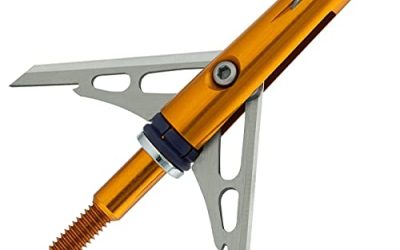
The Hypodermic NC is the pick for hunters who like the Hypodermic shape but dislike fussing with collars in the dark. Its finger-tab blade lock anchors the two swept-back blades at the pivot, so the head goes from case to quiver to arrow without a collar to orient or seat. The machined stainless steel ferrule is a step up in toughness from the aluminum ferrules on older Rage heads, and the hybrid tip keeps the slim, needle-like profile that made the Hypodermic name. For a whitetail hunter who hunts often and wants the least pre-shot handling, this is the most convenient head in the set.
Watch out for: The thin .035-inch blades can bend on heavy bone, so check them after every shot and keep replacement blades on hand.
Rage Hypodermic 100 Grain
- Best for: Experienced Rage users with heavier setups who want the widest cut in the line.
- Weight: 100 grain
- Variant covered by this ASIN: 100 grain, 3-pack
- Blades: 2 blades, .035-inch stainless steel
- Cutting diameter: 2+ inch expandable cut
Experienced Rage users with heavier setups who want the widest cut in the line.
Collars are single-use in practice; a collar that has been shot, nicked or seated wrong can let a blade open early, so carry spares.
The original Hypodermic is the head that built the line’s reputation, and it still suits hunters who are comfortable managing Shock Collars as part of their routine. The one-piece stainless steel ferrule gives it a solid, weight-forward feel, the hybrid tip enters cleanly, and the blades open to the widest cut in this set at over two inches. That cut is why many hunters stay with it: on a well-placed broadside shot it leaves a heavy blood trail and a short track. If your bow carries enough draw weight and arrow mass to push a big cut through a deer, this remains a sound, proven choice.
Watch out for: Collars are single-use in practice; a collar that has been shot, nicked or seated wrong can let a blade open early, so carry spares.
Rage 3-Blade Chisel Tip SC 100 Grain (60100)
- Best for: Hunters who expect quartering shots and want a tip that stands up to bone contact.
- Part number: 60100
- Weight: 100 grain
- Variant covered by this ASIN: 100 grain, 3-pack
- Blades: 3 blades, .035-inch thick stainless steel
Hunters who expect quartering shots and want a tip that stands up to bone contact.
The aluminum ferrule is less burly than the stainless ferrules above, and three blades mean more edges to inspect and replace after a hit.
The 3-Blade Chisel Tip SC is the rugged option, built for shots that might meet rib or shoulder on the way in. Its steel chisel tip is shaped to punch through bone rather than glance off it, and three swept-back blades cam into a 1.6-inch final cut, with the listing noting a 2.125-inch slap-cut potential at entry. The narrower final diameter asks less of the arrow than the 2-inch heads, which helps on quartering angles. An anodized aluminum ferrule keeps the head light, and the black polymer Shock Collar holds the blades until impact. Choose it when your hunting ground produces close, angled shots.
Watch out for: The aluminum ferrule is less burly than the stainless ferrules above, and three blades mean more edges to inspect and replace after a hit.
Which One Fits Your Situation
Whitetail Deer From a Treestand
Treestand shots are usually close, steep and broadside or slightly quartering, which is the Hypodermic NC’s home ground. The 2-inch cut opens a wide wound channel on a downward angle, and the no-collar lock means one less thing to check while you are clipped in and waiting in low light. Keep a spare head in the pack, because a head that strikes a limb or the ground after passing through should be retired until its blades are replaced.
Ground Blind and Close-Range Shots
From a ground blind, shots come fast and angles are rarely perfect. The original Hypodermic earns its place here because its wide cut forgives a hit that lands a rib or two back, leaving a blood trail you can follow from ground level. Manage the collars at home rather than in the blind: seat a fresh collar on each hunting arrow before you leave, and store arrows so blades cannot snag blind fabric or clothing on the draw.
Hogs, Bear and Thicker Hide
Hogs carry a tough shield over the shoulder, and bear hide and fat can close around a narrow wound. The 3-Blade Chisel Tip SC fits this work because its steel tip is built to break through gristle and bone instead of deflecting, and its three blades keep cutting if one edge dulls. Keep shots tight behind the shoulder, since even a chisel tip cannot rescue a hit placed squarely into the heaviest part of a big boar’s shield.
Lower Draw Weight Setups
If you draw under roughly sixty pounds or shoot a light arrow, spend your energy wisely. The 3-Blade Chisel Tip SC’s 1.6-inch cut asks the least of the three heads here, and its chisel tip keeps punching on ribs that might slow a wider head. Limit your range, wait for broadside angles, and favor heavy arrows, because penetration depth matters more than cut width when the setup is light.
Common Mistakes
- Reusing a Shock Collar after a shot or after it has been nicked in the quiver, which invites a blade to open in flight.
- Hunting with blades that were only checked by eye; a bent or dulled blade changes flight and shrinks the cut, so spin-test every head.
- Matching a 2-inch head to a light arrow and low draw weight, then blaming the broadhead when penetration falls short.
- Mixing grain weights between field points and broadheads, which shifts arrow balance and point of impact.
- Ignoring local rules; some states restrict mechanical broadheads or set minimum cutting diameters, so check before the season.
Frequently Asked Questions
Are Rage broadheads legal for deer hunting everywhere?
No. Most states allow mechanical broadheads for deer, but a few restrict them for some seasons or species, and some set rules on cutting diameter or barbed blades. Rage heads are not barbed, since the blades fold forward for removal, yet read your current state regulations before the season and confirm expandable heads and your chosen cut size are permitted for the hunt you have planned.
Do Rage broadheads fly like field points?
They are designed to, because the blades ride closed in a slim profile that presents little surface to the air. In practice, small tuning issues that field points forgive can show up with any broadhead, so shoot your hunting heads or the matching practice head before the season. If groups drift, check arrow spine, insert alignment and blade seating first, and only then adjust the bow.
Can I reuse a Rage broadhead after it passes through an animal?
Often yes, but not as it sits. The ferrule usually survives, while blades bend or dull and a Shock Collar is spent. Strip the head down, wash it, spin-test the ferrule for wobble, and fit fresh blades and a fresh collar where the model uses one. On the Hypodermic NC, check that the finger tabs still hold the blades firmly. If anything feels loose or bent, retire the head.
What is the difference between Shock Collar and No Collar Rage heads?
A Shock Collar head holds its blades shut with a polymer collar that the blades cut through on impact, so the collar is a replaceable part you renew. A No Collar head like the Hypodermic NC anchors the blades with finger-like tabs at the pivot point, no collar at all. Both systems work when they are undamaged; the choice is between managing a consumable part and managing tab condition.