Key takeaways
- Compare electric log splitters by listed splitting force, log size limits and cycle time, with three Amazon picks for home firewood piles of different sizes.
The real decision with an electric log splitter is not how impressive the tonnage figure sounds. It is whether the machine in front of you can handle the actual rounds stacked beside your shed: their diameter, their length, and how gnarled the grain is. A compact unit that swallows straight ten-inch rounds all afternoon beats a stronger machine that sits unused because your logs are too long for its cradle, or because the circuit you can reach cannot feed its motor.

This guide is for homeowners heating with a stove, cabin owners clearing storm fall, and anyone replacing arm-powered splitting with a plug-in machine. Every pick below was chosen from the numbers printed on its Amazon listing — splitting force, log capacity, motor draw and cycle time — rather than from any score or popularity measure, so you can match the machine to your own woodpile.
Quick Picks
As an Amazon Associate we earn from qualifying purchases
| Product | Best for | Key spec from title |
|---|---|---|
| WEN Electric Log Splitter, 6.5-Ton Capacity with Portable Stand (56208) | Waist-height splitting of stove-length rounds | 6.5-ton capacity with portable stand |
| Boss Industrial 7 Ton Electric Log Splitter (ES7T20) | One-handed operation at home, garage or cabin | 7-ton splitting force |
| SuperHandy Log Splitter Portable Electric 14 Ton | Larger rounds near a suitable outlet | 14-ton ram system with Bucher gear pump |
How to Choose
Match force to the rounds you actually split
Splitting force only matters against the wood in front of you. Straight-grained rounds within the listed diameter limit split far more easily than knotty, forked or stringy pieces of the same size, so a modest force figure can be plenty for clean softwood and seasoned hardwood rounds, while twisted elm or crotch pieces can stall a much stronger ram. Look at your pile honestly before choosing. If most rounds are straight and under ten inches across, the smaller machines here fit. If your pile regularly holds wider, uglier pieces, step up in force rather than hoping technique will close the gap.
Measure log length and diameter against the cradle
Every listing states a maximum log length and diameter, and those two numbers quietly decide whether a splitter suits your stove. A unit capped at twenty and a half inches of length works when your rounds are already bucked short, yet it frustrates anyone whose furnace takes longer pieces. Diameter limits matter just as much, because an oversize round cannot sit safely in the cradle at all. Before ordering, measure a sample of your unsplit rounds with a tape, including the widest ugly one, then compare those figures with the capacity printed in each listing instead of guessing from photographs.
Check the circuit the motor needs
Electric splitters trade fuel handling for a hard electrical requirement. Listings here draw thirteen and a half to fifteen amps, which means the outlet, the breaker and any extension lead all become part of the purchase. A long, thin lead can starve a motor and trip protection, so plan where the machine will live: close to a suitable socket, under cover, with room to stack split wood on the far side of the wedge. If your only outdoor outlet shares a circuit with hungry workshop tools, expect interruptions. Confirm the plug type and draw on the listing, then walk your own setup before the machine arrives.
Think about working height and moving the machine
Splitting is repetitive lifting, so posture and portability shape how much wood you finish in a session. A stand raises the cradle toward waist height and saves your back across a cord of rounds, while a low frame suits short bursts and stores in less space. Weight matters too: these machines range from roughly one hundred seventeen pounds upward, all on small transport wheels meant for yards and driveways rather than stairs or rough ground. Picture the route from storage to splitting spot. If that route crosses gravel, grass or a lip into the garage, choose the layout you can genuinely move alone.
The 3 Best Options
WEN Electric Log Splitter, 6.5-Ton Capacity with Portable Stand (56208)
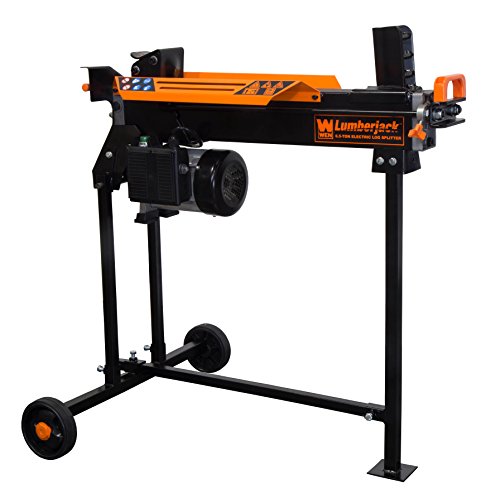
This WEN suits the homeowner whose firewood arrives as modest rounds and whose splitting happens in steady sessions near the house. The included stand lifts the work to a comfortable height, which changes the feel of a long afternoon more than a small jump in force would. Its capacity ceiling is clear, so it rewards buyers who buck their logs to length in advance and keep oversize pieces for another method. For a stove fed with shorter, straight rounds, it covers the job without demanding a bigger circuit or a larger storage corner.
Specs
- Splitting force listed: 6.5 tons
- Model: 56208
- Power: corded electric, 15-amp motor as listed
- Log capacity from listing: up to 10 inches in diameter and 20.5 inches in length
- Included: portable stand
Best for: Splitting stove-length rounds at waist height beside the house.
Watch out for: Confirm your rounds stay within the listed diameter and length, since the stand does not raise the capacity ceiling.
ASIN: B0B4KNQFTC
Boss Industrial 7 Ton Electric Log Splitter (ES7T20)
Boss Industrial built this machine around one-handed operation, which leaves the other hand free to steady and reposition rounds between strokes — a layout many solo operators prefer once the rhythm sets in. The listed force sits a step above the WEN, and the frame rides on rubber wheels sized for moving between garage, driveway and wood store. It fits the cabin or home where one person does all the splitting and values control at the cradle over raw tonnage. The makers also state plainly in their guidance that knotted or curved logs are outside what this design is for, which is useful honesty when sorting a pile.
Specs
- Splitting force listed: 7 tons
- Model: ES7T20
- Motor listed: 2 horsepower, 115 volts, 13.5 amps
- Log capacity from listing: up to 10 inches in diameter and 20.5 inches in length
- Weight listed: 117 pounds
- Product dimensions listed: 40 x 13.5 x 20.5 inches
Best for: One person splitting alone who wants a free hand for positioning rounds.
Watch out for: The manufacturer guidance excludes knotted or curved logs, so sort those pieces out of the pile before you start.
ASIN: B00GNSCGIW
SuperHandy Log Splitter Portable Electric 14 Ton Rapid Auto Return Hydraulic Ram System Bucher Gear Pump 2.5eHP 15Amp Motor Horizontal Full Beam Steel Wedge
When the pile holds wider rounds and the smaller machines would spend their day stalled, this SuperHandy doubles the force on offer while staying corded and horizontal. Its two-stage pump arrangement is listed as the reason it can keep cycle pace up on softer wood yet push harder when the ram meets resistance. It still plugs into a household-grade circuit on paper, so the appeal is clear for a property with plenty of hardwood and a suitable outlet nearby. The trade is bulk and appetite: it asks more of your circuit, your storage space and your arms when moving it.
Specs
- Splitting force listed: 14 tons
- Model: GUO084
- Motor listed: 2.5 eHP, 15 amps, 1800 watts
- Pump listed: Bucher gear pump, two-stage hydraulic system
- Log length from listing: up to 20 inches
- Orientation: horizontal, full beam with steel wedge
Best for: Bigger hardwood rounds split near a strong, nearby outlet.
Watch out for: Check the exact diameter limit and cycle time on the listing before ordering, and confirm your circuit can carry a sustained 15-amp draw.
ASIN: B09GW8FRXX
Which One Fits Your Situation
You split a stove’s worth of wood each season
Choose the WEN. A household burning a modest amount of wood in a stove usually handles straight rounds of moderate size, exactly the workload its listed capacity describes. The stand keeps the work at a comfortable height across a session, and the machine stores without dominating the garage. Buying more force than this pile needs adds weight and cost without changing the result in the wood store.
You work alone and reposition every round by hand
Choose the Boss Industrial ES7T20. One-handed control is the detail that matters when nobody else is there to hold a round steady or clear split pieces away. Its force figure covers typical home and cabin rounds, and the wheeled frame moves between storage and splitting spot without a second pair of hands. Sort out knotty pieces first, following the maker’s own guidance, and the machine fits the solo routine well.
Your pile includes wide, stubborn hardwood
Choose the SuperHandy 14 Ton. Doubling the listed force changes which rounds are worth attempting, particularly dense hardwood that would stall a smaller ram halfway through the stroke. Keep the work close to a capable outlet, because this machine earns its keep on power drawn from the wall rather than fuel in a tank. Measure your longest rounds first, since the listed length limit is shorter than on the other two picks here.
You split in short sessions wherever the wood lands
Start with whichever machine you can store closest to the pile. All three picks are corded, so the practical winner is the one whose motor your nearest circuit can feed without a long lead trailing across the yard. For short, frequent sessions on ordinary rounds, the WEN or the Boss keeps setup minimal. Save the SuperHandy for properties where the pile itself, not convenience, is the hard part of the job.
Common Mistakes
- Buying on tonnage alone, then discovering the cradle cannot accept the length or diameter of the rounds already stacked at home.
- Feeding knotted, forked or curved rounds into a machine whose maker limits it to straight logs, then blaming the ram for stalling.
- Running a fifteen-amp splitter from a long, light extension lead, which starves the motor and trips protection mid-session.
- Forgetting that electric still means hydraulic: the machine needs its oil checked and its wedge kept clear, just like any other splitter.
- Leaving a corded splitter uncovered outdoors between seasons, inviting corrosion on the beam and damage to the cable and switch.
Frequently Asked Questions
How much splitting force does a home woodpile need?
It depends on the rounds, not on a universal figure. Straight rounds inside the listed diameter limit split readily, so the six and a half to seven ton machines here cover many stove piles. Wider, denser or knotty wood pushes you toward the fourteen ton pick. Match force to the hardest wood you split regularly, not the easiest.
Can an electric splitter run from a normal household outlet?
The listings here draw between thirteen and a half and fifteen amps, which many household circuits can supply when little else is running on them. Problems start with shared circuits and long extension leads. Check the draw printed on the listing, keep the lead short and suitably thick, and give the machine a circuit that is not already feeding other heavy tools.
What log size should I measure before ordering?
Measure both length and diameter on a representative sample, including the largest round you realistically expect to split. Compare those figures with the capacity in the listing, remembering that a round can fit the cradle yet still resist splitting if the grain is twisted. Bucking rounds shorter before splitting day makes every machine here easier to live with.
Does a stand change how a splitter performs?
A stand does not add force, yet it changes how long you can work comfortably by raising each lift to waist height. Across a large pile that difference decides whether the job finishes in one session. The WEN includes its stand in the listing, while the other picks sit lower, so weigh posture against storage space when choosing between them.