Key takeaways
- Compare five solar deer repellent devices for yard use, with motion sensors, ultrasonic sound, LED strobes and coverage details to match your garden.
A deer can strip a vegetable bed or a row of new shrubs in a single night, and the real decision is not which gadget looks toughest. It is how much ground you need to guard, where the animals enter, and whether a sensor can see that approach clearly. Solar ultrasonic deterrents work by startling deer with sound and light, so placement and detection range matter far more than any single feature on the box.

This guide compares five solar-powered devices sold on Amazon, chosen from the product names and listing details on their Amazon pages. It covers single units for a small bed, two-packs for a pair of entry points, and four-packs for a larger yard. Every option below runs on solar power with a backup charging option, and each one is described with the specifications its own listing gives.
Quick Picks
As an Amazon Associate we earn from qualifying purchases
| Product | Best for | Key spec from title |
|---|---|---|
| G-Jyuncyou AR30, 2-Pack | Guarding two garden entry points | PIR sensor, 110-degree angle, 5 modes |
| CXIENAOY Sonic Fortress Pro, 4-Pack | Covering a large yard with four units | PIR sensor up to 30 ft, solar plus USB |
| Jahy2Tech Sonic Fortress Pro, 2-Pack | Wide coverage per device | Up to 2,000 sq ft coverage per device |
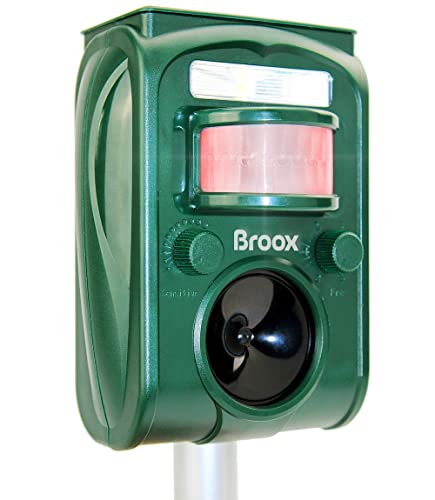
| Broox RB-101, Single Unit | A single bed or narrow passage | Solar plus rechargeable batteries, 110-degree PIR |
| Thoveneth, 4-Pack | Four corners of a yard | 110-degree PIR, 25–33 ft range, IPX4 |
How to Choose
Detection Range and Angle
A motion sensor only guards the ground it can actually see, so start by measuring the distance from the mounting spot to the plants you want to protect. Most devices in this guide detect motion between roughly 20 and 33 feet, with a sensor angle around 110 degrees. A wider angle covers a broad bed from one corner, while a longer range suits a device mounted at the far end of a lawn. Remember that the sensor needs a clear line of sight: tall grass, a fence panel, or a parked wheelbarrow can all block the view. Walk the yard at dusk, note where deer tracks or droppings appear, and aim the sensor across that route rather than straight at a wall.
Sound Modes and the LED Strobe
Ultrasonic devices emit high-frequency sound that deer dislike, and many models add a flashing LED strobe to strengthen the startle effect. The G-Jyuncyou AR30 offers five modes, while the Broox RB-101 gives five frequency settings that can be combined with an alarm or a light. A device with several modes lets you change the pattern if deer grow used to one setting, a real risk when one mode runs unchanged for months. Sound alone may not be enough near a busy road or a noisy garden, so the strobe matters more in those spots. Check whether the model you pick lets you switch modes without taking it off its stake.
Power: Solar, USB, and Batteries
Every device here charges from sunlight, which keeps running costs low and avoids trailing a cable across the lawn. The catch is that a shaded corner or a north-facing fence may not give the panel enough sun, especially in winter. That is why a USB backup matters: the G-Jyuncyou AR30 recharges by cord in about three hours, and the CXIENAOY and Jahy2Tech models also accept USB charging. The Broox RB-101 uses three rechargeable Ni-MH batteries topped up by its panel, while the Thoveneth listing says four AAA batteries are included. Before buying, look at how many hours of direct sun your chosen spot actually gets.
Coverage, Pack Size, and Placement
Pack size is the simplest way to match a device to a yard, but it is not the whole story. A four-pack sounds generous until you realise each unit covers a limited patch, and a single well-placed unit can guard a narrow passage better than four poorly aimed ones. Compare coverage per unit first, then add up the total for the pack. Corners and fence gaps deserve a unit each, while an open lawn may need overlapping sensor arcs. Mount the device at roughly deer chest height, angle the panel toward the sun, and leave a clear approach lane so the sensor triggers before the animal reaches the plants.
The 5 Best Options
G-Jyuncyou AR30 Solar Ultrasonic Animal Repellent, 2-Pack
The G-Jyuncyou AR30 suits a gardener who needs two deterrents without buying a full four-pack, for example one at the vegetable bed and one at the flower border. Five modes give you room to experiment, and the ultrasonic output runs from 18 to 45 kHz alongside an LED strobe that adds a visual warning after dark. Its solar panel adjusts from 0 to 90 degrees, which helps when the only sunny spot sits at an awkward angle, and a cord backup recharges the unit in about three hours on cloudy stretches. The IP65 rating means rain should not be a worry.
Specs
- PIR sensor, 110-degree angle
- Detection range listed as 26 ft, with 30 ft also stated in the listing body
- 5 modes
- Ultrasonic output 18–45 kHz
- LED strobe
- IP65
- Adjustable solar panel, 0–90 degrees
- Cord backup with 3-hour recharge
- 2-pack, Green
Best for: guarding two separate garden entry points with one purchase.
Watch out for: the listing gives two different detection ranges, 26 ft in one place and 30 ft in another, so plan your placement around the shorter figure.
CXIENAOY Sonic Fortress Pro, 4-Pack
Four units make the CXIENAOY Sonic Fortress Pro a natural fit for a larger yard, where one device at each corner can build a ring of coverage around beds and borders. Each unit pairs ultrasonic sound with a flashing LED, and the sensor reaches up to 30 feet, which is enough to watch a wide stretch of lawn from a fence post. Solar charging keeps the units running without cables, and a USB option covers the dull weeks when the panel falls behind. Spreading four devices also lets you move one to a new hot spot if deer change their route, rather than buying another single unit.
Specs
- PIR sensor, up to 30 ft
- Ultrasonic sound plus flashing LED
- Solar plus USB charging
- 4 units
- Model 0454US2
Best for: covering a large yard with a unit at each corner.
Watch out for: third-party sources disagree on this line, with different model numbers, a 120-degree arc claim, a 1,200 sq ft per-unit coverage claim, and IPX4 versus IP65 ratings, so treat the listing figures above as the ones to verify before buying.
Jahy2Tech Sonic Fortress Pro, 2-Pack
The Jahy2Tech Sonic Fortress Pro stands out on coverage per device, with the listing claiming up to 2,000 sq ft per unit, which makes a two-pack a sensible choice for a medium yard with two distinct areas to protect. Its sensor covers 25 feet with an angle of 110 to 150 degrees, giving a broad sweep from a single mounting point. Ultrasonic output spans 13.5 to 45 kHz, and the IP65 rating suits a device left outside through rain. Solar charging handles day-to-day power, USB charging covers overcast spells, and the listing includes a one-year manufacturer warranty.
Specs
- 25 ft detection
- 110–150 degree sensor angle
- Ultrasonic output 13.5–45 kHz
- IP65
- Solar plus USB charging
- Up to 2,000 sq ft coverage per device
- 1-year manufacturer warranty
- 2-pack
- Model DB0370US(AB)_2-XYJ@3-1013
Best for: a medium yard where each device needs to cover a wide area.
Watch out for: the coverage figure is a listing claim for open ground, so a fenced or heavily planted yard may see less real-world range.
Broox RB-101 Solar Animal Repeller
The Broox RB-101 is the only single unit in this guide, which makes it the right pick when only one bed, path, or gate needs guarding. Its PIR sensor covers 110 degrees with detection between 20 and 25 feet, and five frequency modes run from 13.5 up to 45.5 kHz, with options to combine the sound with an alarm, an LED, or both. Three Ni-MH rechargeable batteries store solar power for night use, and a USB cord is included for topping up. At 14 inches tall and 199 grams, it is light enough to move around the garden as the seasons change what needs protecting.
Specs
- Solar plus 3x Ni-MH rechargeable batteries, USB cord included
- 110-degree PIR sensor
- 20–25 ft detection
- 5 frequency modes: 13.5–19.5 kHz, 14.5–24.5 kHz, 24.5–45.5 kHz, alarm plus LED, ultrasonic plus LED
- IP65
- 14 in tall
- 199 g
- Green and Silver
- Sold by Raymond Broox Inc.
- Model RB-101, also listed as GH-501
Best for: protecting a single bed, gate, or narrow passage.
Watch out for: as a single unit it guards one approach only, so a yard with several entry points will need more than one device.
Thoveneth Solar Ultrasonic Animal Repellent, 4-Pack
The Thoveneth four-pack is built for gardeners who want a unit at every corner of the yard, with each device watching a 110-degree arc out to a range of 25 to 33 feet. Ultrasonic output runs from 13.5 to 45 kHz with a red LED flash, and each trigger sends a 15-second signal before the unit drops back to standby. Solar power keeps the devices running without wiring, and the IPX4 rating handles splashing rain. The pack weighs 2.35 lb in total, so each unit is light enough to stake or hang wherever deer slip through.
Specs
- 110-degree PIR sensor
- 25–33 ft detection range
- Ultrasonic output 13.5–45 kHz
- Red LED
- Solar powered
- IPX4
- 15-second signal per trigger, then standby
- 2.35 lb pack weight
- 4 AAA batteries required, included
- 4-pack
- Model TO-DA, part FD-NB
Best for: placing one unit at each corner of a larger yard.
Watch out for: the listing says four AAA batteries are included, which conflicts with marketing text on the same page suggesting no batteries are needed, so confirm what arrives in the box.
Which One Fits Your Situation
A Large Yard With Several Entry Points
A four-pack is the practical starting point when deer can slip in from more than one side. The CXIENAOY Sonic Fortress Pro gives you four units with sensors reaching up to 30 feet, while the Thoveneth four-pack offers a slightly longer maximum range of 33 feet. Place one unit at each gap in the fence or hedge, aim the sensors across the approach paths, and overlap the arcs slightly so no quiet lane is left between two units.
A Small Garden or a Single Bed
One well-placed device is enough when only a single bed or gate is under attack. The Broox RB-101 covers a 110-degree arc out to 25 feet, which suits a vegetable patch or a narrow side passage. Its five frequency modes let you try different settings if deer keep testing the same spot, and its light weight makes it easy to shift to another bed later in the season.
Two Separate Areas to Protect
Two beds at opposite ends of a yard call for a two-pack rather than stretching one sensor across the whole space. The G-Jyuncyou AR30 gives each area its own unit with five modes and an adjustable solar panel, while the Jahy2Tech Sonic Fortress Pro offers wider coverage per device at up to 2,000 sq ft. Pick the G-Jyuncyou when the two spots get different amounts of sun, and the Jahy2Tech when each area is broad and open.
A Shaded Spot With Limited Sun
Solar panels need direct light, so a device tucked under trees or against a north-facing fence may run flat. The G-Jyuncyou AR30 is the strongest choice here because its panel tilts from 0 to 90 degrees and a cord backup recharges it in about three hours. The Jahy2Tech and CXIENAOY models also accept USB charging, which is worth using on a schedule during the darkest weeks of winter.
Common Mistakes
- Pointing the sensor at a wall, fence, or dense shrub that blocks its view of the approach path.
- Mounting the device too low, so grass and low plants trigger it or hide it from deer.
- Placing the solar panel in shade and then wondering why the unit stops working at night.
- Buying one unit for a yard with three or four entry points and leaving the other gaps open.
- Leaving the same mode running for months without change, giving deer time to grow used to it.
Frequently Asked Questions
Do ultrasonic deer repellents work on every deer?
No deterrent works on every deer in every yard, and these devices are best seen as one layer of protection rather than a guaranteed barrier. They startle deer with sound and light, which is usually enough to turn away a casual visitor. A hungry deer with no other food nearby may push through, so combine a repellent with fencing or netting around your most valuable plants for the best result.
Where should I place a deer repellent device?
Mount it at roughly deer chest height near the spot where deer enter the yard, with a clear line of sight across their approach path. Aim the sensor across the route rather than straight at a fence or wall, and angle the solar panel toward the sunniest direction. Corners, fence gaps, and the ends of hedges are the most useful positions.
Do these devices work at night?
Yes, that is when they matter most, since deer often feed after dark. The motion sensor detects body heat and movement in the dark, and the LED strobe is more visible at night than during the day. Night operation depends on stored power, so a well-charged battery or a panel that saw enough sun during the day is essential.
Will ultrasonic sound bother pets or neighbours?
Ultrasonic frequencies sit above the range most people can hear, so neighbours are unlikely to notice the sound itself, though the flashing LED may be visible from nearby windows. Dogs and cats can hear higher frequencies than people, so avoid pointing a unit directly at a pet run or a kennel. If a pet seems uneasy, move the device or switch it to a light-only mode.